Rubber and Plastic Pipe Selection Guide: Insulation, Condensation Prevention & B1 Flame-Retardant
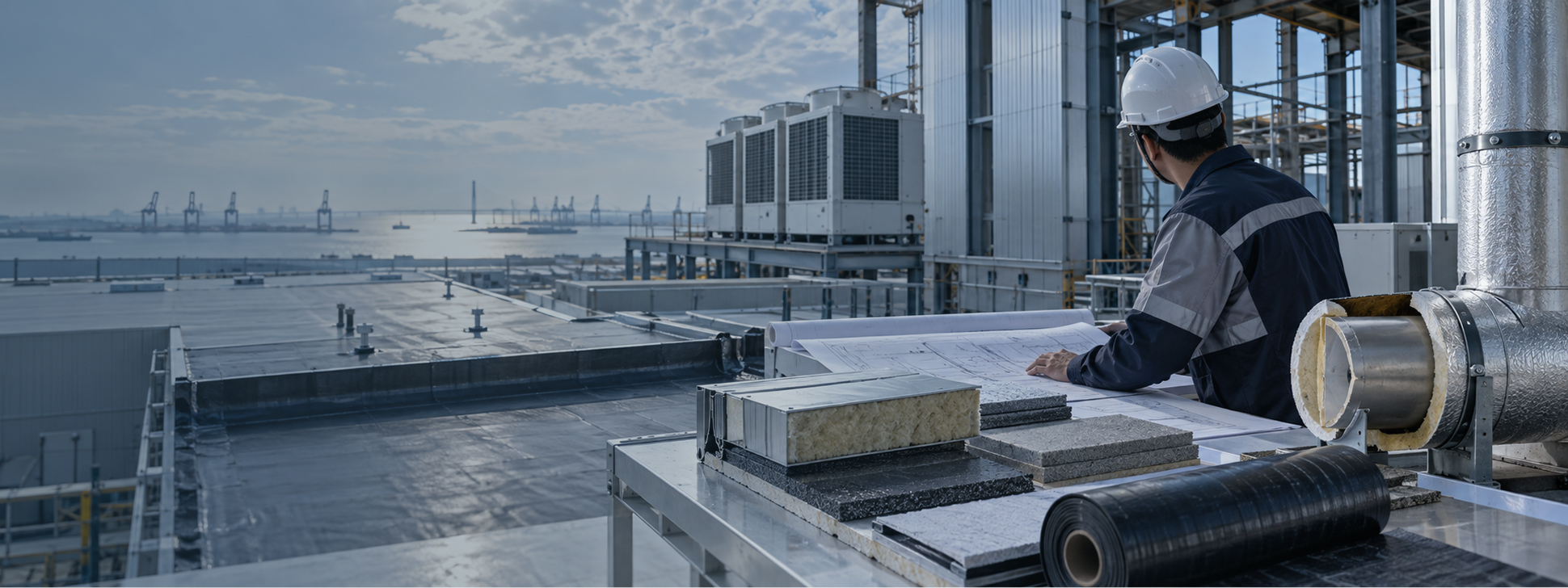
In HVAC systems, hot and cold medium delivery pipelines, industrial pipe networks and municipal water supply & heating projects, traditional pipe insulation materials often suffer from water absorption, condensation, vibration, and poor fit. These issues not only increase heat and cold loss and operating costs, but also shorten the overall service life of pipeline systems. As a tubular flexible closed-cell foam insulation material, rubber and plastic pipe features a fine uniform closed-cell structure, delivering excellent thermal insulation, moisture resistance, B1 flame-retardant performance, and vibration damping flexibility. It is a preferred product for thermal insulation and protection of all kinds of circular pipelines, widely applied in commercial buildings, central air conditioning systems, cold chain facilities, chemical and light industrial sectors, marine applications and many other fields.
Made mainly from nitrile rubber and polyvinyl chloride with eco-friendly additives, rubber and plastic pipe is manufactured through mixing, closed-cell foaming and shaping. It is classified as a flexible foam rubber and plastic thermal insulation product and complies with national standard GB/T 17794-2021. The pipe is soft, highly elastic, and well-formed, with excellent water resistance, and requires no additional moisture-proof layer. Compared with rigid insulation pipes, it offers great toughness and flexibility to fit various bent and special-shaped pipelines. It is a practical and eco-friendly insulation pipe commonly used in civil buildings and industrial pipe networks.
1. Dense Closed-Cell Structure for Moisture Resistance and Condensation Prevention
Featuring complete and independent closed cells, the pipe has extremely low water absorption and high moisture resistance. Water vapor can hardly penetrate the material, which fundamentally prevents dampness, expansion and performance degradation. With outstanding flexibility, it closely wraps around pipeline outer walls with tight joints, blocking external water vapor and air penetration and effectively addressing common condensation and dripping problems on pipelines. It resists hollowing, cracking and pulverization during long-term operation, ensuring stable performance of the entire pipe insulation system.
2. Low Thermal Conductivity for Efficient Insulation and Energy Saving
The product offers superior insulation performance with a thermal conductivity of ≤0.034 W/(m·K), forming a stable thermal barrier. It retains heat for hot water pipelines and provides cold retention for chilled water pipes and cold storage pipelines, greatly reducing heat and cold loss and cutting energy consumption of air conditioning, refrigeration and heating equipment. Its thermal performance remains stable under fluctuating temperature and humidity, so the insulation effect does not degrade significantly, delivering long-lasting and reliable energy-saving results.
3. B1 Flame-Retardant Material for Enhanced Overall Fire Safety
Rubber and plastic pipe reaches B1 flame-retardant grade as specified in standard GB 8624-2012 with reliable fire safety performance. When exposed to open flames, it only carbonizes slowly and will not ignite or spread flames. It produces little smoke and no toxic fumes during combustion. Suitable for key fire prevention areas such as indoor building spaces, equipment rooms, air duct corridors and industrial workshops, it fully meets fire acceptance standards for public buildings, high-rise buildings and industrial plants, ensuring safe application.
4. Wide Temperature Range, Vibration Damping and Long Service Life
Rubber and plastic pipe can operate stably in the temperature range from -40°C to 105°C. It resists high and low temperatures, acid, alkali, mildew and aging, adapting to harsh working environments including indoor and outdoor areas, humid workshops and ventilation corridors. Its high elasticity effectively reduces vibration and resonance generated during pipeline operation and provides sound absorption effects to improve the on-site environment. Under normal working conditions, its service life can exceed 15 years, lowering costs for subsequent maintenance and replacement. Being free of formaldehyde and odor, it is eco-friendly and meets the material requirements of modern green buildings.
5. Easy Installation for Diverse Pipeline Applications
Lightweight and easy to cut, the pipe requires no complex tools and allows flexible installation. It can be directly sleeved onto pipelines or wrapped and fixed after longitudinal cutting, and works well for bent pipes and reducers. The convenient construction helps shorten project duration and save labor costs. In construction fields, it is used for central air conditioning pipelines, water supply and drainage pipes and heating pipe networks. In industrial fields, it is used for chemical delivery pipes, equipment connecting pipes and marine supporting pipelines. We supply a full range of pipe diameters and specifications with custom processing available. You can select proper products according to actual working conditions to balance application performance and project cost.
As a direct manufacturer, we provide rubber and plastic pipes of complete specifications with sufficient stock. Custom non-standard sizes, special facings and OEM services are supported. Complete export documents guarantee smooth customs clearance worldwide. Feel free to contact us for bulk orders, project selection guidance or the latest quotations. We will provide you with professional and comprehensive solutions for pipeline insulation.