What Material Grade is Used for C Channels?
Your C channel spec calls out a grade number. Pick the wrong one, and your structure ends up underbuilt or badly overpriced.
C channels commonly use ASTM A36, A572 Grade 50 for higher-strength applications, or A500 for formed structural tubing sections. A36 works well for general framing. The right grade depends on load, span, and forming method, not price alone.
I have specified many C channel projects over the years. Buyers often pick a grade out of habit or for the lowest price. The right grade choice changes with the load path, the fabrication method, and the total project budget. A section that looks fine on a spec sheet can still underperform once real connections, bracing, and site conditions come into play. This article breaks down the three questions I hear most about C channel selection. Read on, because a wrong grade or orientation choice becomes expensive to fix once steel is already cut and welded.
What is Stronger, C Channel or I Beam?
Buyers assume one shape always wins. In real structural design, strength depends on how the load actually travels through the section.
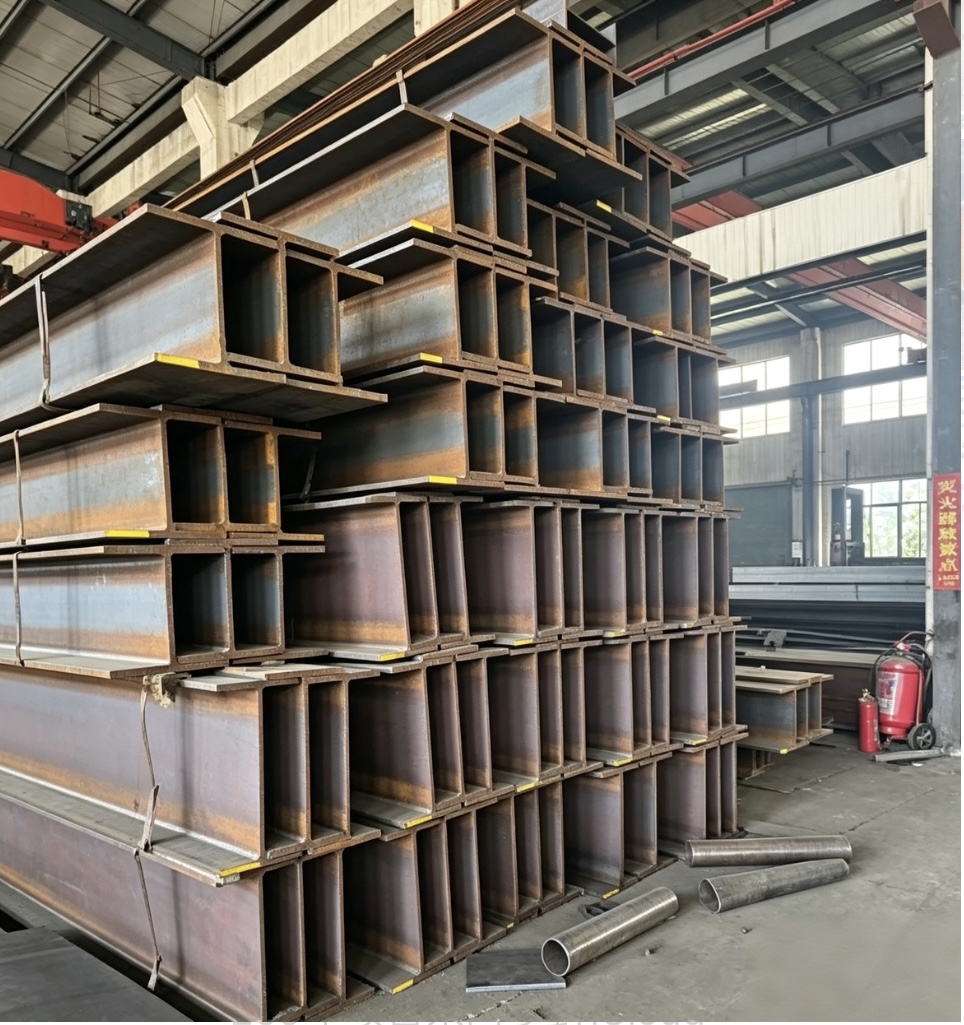
An I-beam usually performs better under major bending loads because more material sits away from the neutral axis. A galvanized C channel is great for lighter framing, edge supports, and brackets. It’s best when you need one-sided access over high bending capacity.

Why section shape changes the answer
I do not compare shapes by name alone. I compare moment of inertia and how each section resists bending. An I-beam places most of its material in the flanges, far from the neutral axis. This shape resists bending very efficiently for a given weight of steel.
A galvanized C channel places material differently. Its open shape gives good bending resistance along one axis, but it twists more easily under off-axis loads. This makes it less ideal for long spans carrying heavy point loads, but very practical where only one flat side needs contact with another part.
|
Factor |
C Channel |
I Beam |
|
Bending resistance (major axis) |
Good |
Excellent |
|
Torsional stability |
Lower |
Higher |
|
Installation access |
One-sided, easier |
Needs access from multiple sides |
|
Typical use |
Framing, brackets, edge supports |
Primary beams, long spans |
For lighter framing jobs, many buyers look at specification sheets from suppliers like Xiaolong. They compare C channels and I beams. This is important. Section properties can vary by manufacturer, even for the same nominal size.
What Way is the Galvanized C Channel Strongest?
A galvanized C channel can look identical from two directions. Only one of those directions gives you the strength number on the spec sheet.
A galvanized C channel is strongest when loaded along its major bending axis. This happens when the web is vertical and the load is applied straight across the flanges. Loading it sideways, or allowing twisting, reduces its effective strength well below the rated capacity.
Orientation decides the real capacity
Every galvanized C channel has two bending axes. The strong axis runs through the web height, where the section resists vertical loads efficiently. The weak axis runs across the flanges, where the section bends and twists far more easily under the same load.
Installation orientation decides which axis actually carries the load. A channel installed with its web vertical and properly braced against twisting performs close to its rated capacity. The same channel installed on its side, or without lateral bracing, can fail at a fraction of that load. Bracing and connection details matter as much as the section size itself.
I always check the load direction before I trust a published capacity number. A strong section in the wrong orientation is not a strong section at all. It is a liability waiting for the wrong load case. Connection stiffness, brace spacing, and end restraint all shape how close a real installation gets to the rated bending capacity.
Why is the Galvanized C Channel So Expensive?
A quote for galvanized C channel steel can surprise a buyer. Price per ton rarely explains the full number on the invoice.
Galvanized C channel pricing depends on more than steel grade. Thickness, section size, production volume, and forming method all impact the final price. Surface treatment like galvanizing and raw material costs also play a role. Comparing only price per ton often hides the real cost difference between two sections.
What actually drives the price
Grade is only one part of the cost equation. A thicker section needs more raw steel, which raises weight and cost even at the same grade. Section size changes affect forming requirements. Larger channels need heavier rolling equipment and more energy for production.
Galvanizing adds a clear cost step. Hot-dip galvanizing requires a zinc bath, good surface prep, and extra handling. These steps increase the final cost compared to a plain black steel channel. Production volume also matters. A mill running a standard size in bulk usually charges less per unit than a custom or small-batch order.
Raw material price changes impact all steel products. However, the effects vary based on when orders are placed and the terms of contracts. A buyer comparing two quotes should ask about grade, thickness, coating, and order size together, not the price per ton alone. That complete view shows why two similar channels can have different prices on the same order.
Freight and lead time also shape the final delivered cost, though buyers often overlook them during early budgeting. A standard A36 channel from local stock ships faster and costs less than a custom-rolled A572 section from a distant mill. Tight project schedules often make it worth paying more for quick access to a section. This is true even when a cheaper option exists on paper. I always ask buyers to weigh total delivered cost against project timeline, not just the unit price quoted on a single line item.
Conclusion
Choosing a galvanized C channel grade, orientation, and price point together gives a stronger, more cost-effective structural result.

References
1. Kloeckner Metals. Structural Channel Steel Grades: A36, A529, and A572.
2. Bushwick Metals. Steel Channels: Structural and Miscellaneous Channel Grades.
3. EngineerExcel. C Channel Sizes, Moment of Inertia, and Load Capacity.
4. American Institute of Steel Construction (AISC), Modern Steel Construction. Steel Quiz: Material Specifications for Structural Shapes.
5. Metals Depot. A36 Structural Steel Channel.
6. China Royal Steel. The Ultimate Guide to C Channels: Choosing the Right Materials and Models for Modern Construction.