
What Should Buyers Look for in a Reliable PU Wall Panel Supplier?
A cheap quote looks great on day one. Then panels arrive late, or the core is weak. I have watched buyers lose months this way.
A reliable PU wall panel supplier has stable production, clear quality records, tested products, and steady delivery. Buyers should ask for test reports, factory details, and batch data. Price alone tells you very little about long-term project results.
I build my view on years of talks with factories, distributors, and site teams. Below is what I check, in order. Stay with me to the last section, because one question there filters out weak suppliers fast.
Why does Supplier Selection Matter when Buying PU Wall Panels?
Many buyers compare panels and skip the maker. The panel is only the final result. The process behind it decides how it performs.
Supplier choice matters because panel quality depends on the factory, not just the specification. A weak process gives uneven foam, poor bonding, and late orders. A strong supplier keeps results steady from the first order to the twentieth.
The Panel is Only the Output
Two suppliers can quote the same thickness and the same steel skin. The results can still differ. The EN 14509 standard covers factory-made, metal-faced sandwich panels for walls, roofs, and partitions. It includes rigid polyurethane cores. I read that as a clear signal. The market treats these panels as engineered products, not simple boards. A good panel needs a controlled process behind it.
Risk Sits behind the Product
I think about risk in three parts. The first part is quality drift between batches. The second part is a slow reply when a problem appears. The third part is a supplier who does not understand your jobsite. One distributor told me he lost a month on a cold room job. The panels passed inspection. Then the supplier went silent on a joint issue. The delay cost more than the price gap. Good suppliers answer fast and explain clearly. Strong suppliers also share site advice without being asked.
What Manufacturing Capabilities Should a PU Wall Panel Supplier Have?
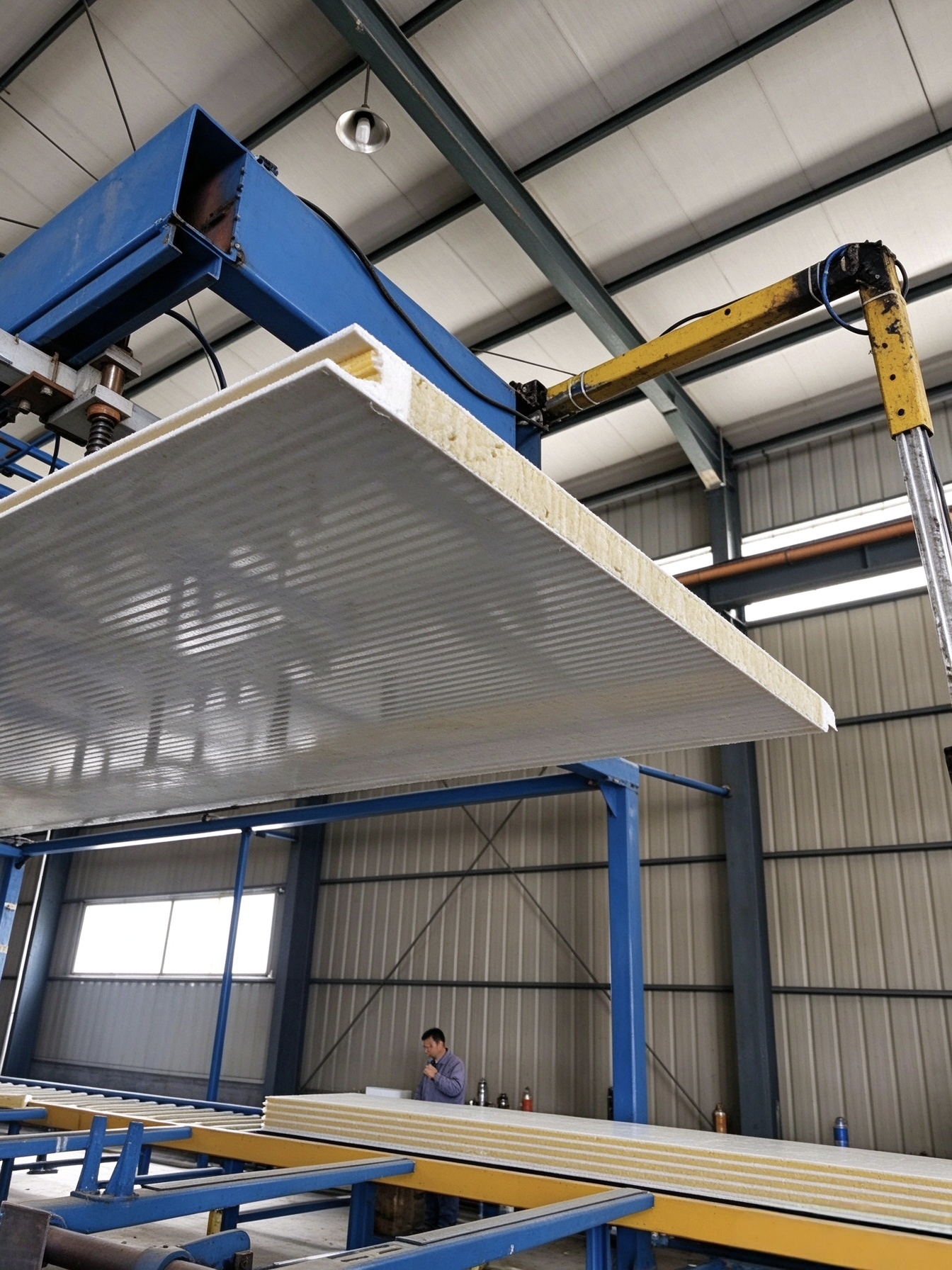
A nice showroom proves nothing. The production line proves everything. I always ask what happens before the foam is poured.
A good supplier should have well-controlled foaming equipment, raw material checks, careful steel skin handling, in-house testing, and trained staff. These items keep foam density, bonding, and panel size steady across large orders.
Process Control Comes First
Foam quality depends on mixing ratio, temperature, and line speed. Small changes shift density and cell structure. I ask how the factory controls each one. I also ask who checks raw materials at the gate. MPA NRW, a German test house, lists core tests such as gross density, closed-cell content, thermal conductivity, and water absorption. If a supplier can name these tests and show results, that is a strong sign.
Records Show Habits
Equipment matters, but people matter as well. At Xiaolong, our team reviews production records with partners because records show habits. A stable line leaves clean data, batch after batch. A weak line leaves gaps. I also look at how the factory stores steel coil and foam chemicals. Poor storage creates hidden defects that no final check can fix. Ask to see the workshop, or ask for a video walk-through. A confident factory says yes right away.
How Can Buyers Evaluate the Quality of PU Wall Panels before Ordering?
Photos hide problems. A sample panel on a desk looks perfect. Real quality shows in the cut edge and the paperwork.
Buyers can check quality by requesting a Declaration of Performance, third-party test data, a cut sample, and batch records. Then they inspect foam structure, skin bonding, edge joints, and panel flatness before placing a large order.
Read the Paper First
Efectis explains that EN 14509 panels are judged on thermal conductivity, mechanical strength, reaction to fire, water and air tightness, dimensional tolerance, and durability. The manufacturer declares these in a Declaration of Performance. I ask for that document first. Then I match its numbers to the test reports. Some suppliers show only one test page. I ask for the full report with dates and lab names. If the numbers do not match, I stop.
Test the Sample by Hand
Paper is not enough, so I always cut a small piece from a sample panel. I look at the foam, press the skin, and check the edge. The table shows my routine.
| Check | What I Look For | Warning Sign |
|---|---|---|
| Foam cross-section | Even, fine cells | Large voids, soft or dark spots |
| Skin bond | Tight, firm contact | Hollow sound, bubbles under the skin |
| Joint edge | Clean profile, straight fit | Gaps or a twisted edge |
| Flatness | Smooth, even surface | Waves or dents |
Each check takes minutes. Together they show how the factory works. I also keep the sample and compare it with the first shipment. If the shipment looks different, I raise the issue right away. A supplier who welcomes this process usually has nothing to hide.
Why is Delivery Capability Important for PU Wall Panel Projects?
A great panel on a late truck still delays the job. Site crews wait. Costs rise every day.
Delivery capability matters because panels are large, easy to damage, and tied to installation dates. A supplier needs strong packing, accurate lead times, and a plan for shipping and storage so panels reach the site in good condition.
Timing Shapes the Whole Job
BDC Network quotes a Metl-Span technical manager who suggests panels arrive no more than two weeks before installation, when possible. Long sea freight makes that hard. So I ask suppliers for honest lead times. I also ask them to split shipments by work stage. Crews then unload only what they need. Fewer touches mean fewer dents.
Packing and Storage Protect Value
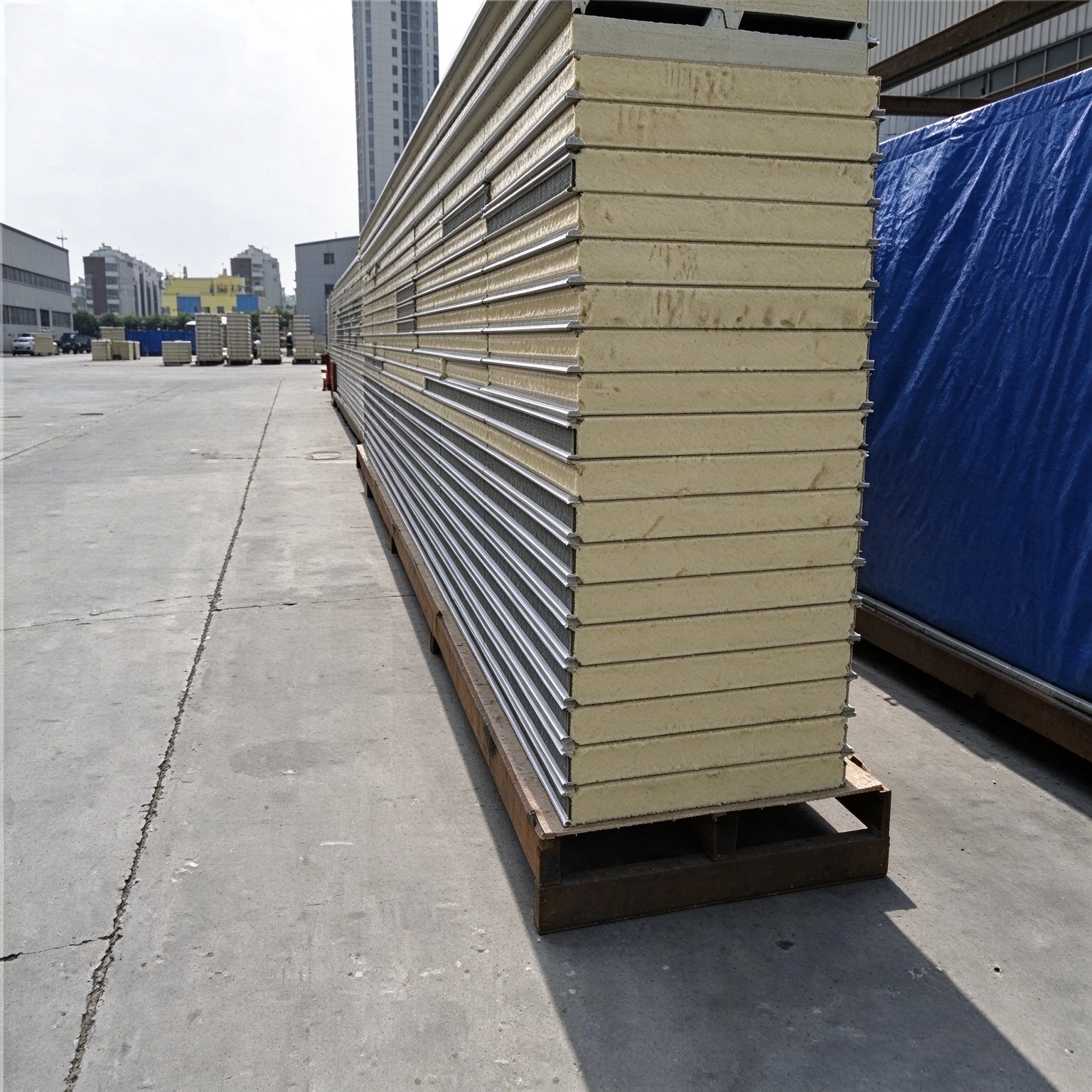
ATAS advises crews to note any shortage or damage on the bill of lading at once. It also warns that lifting a panel by the top face edge may cause delamination. A Metl-Span storage guide says poor storage can harm the finish and the insulation. It treats two to four months as long-term storage. I ask suppliers how they pack corners, protect faces, and label bundles. Good packing cuts claims and saves site time. I also ask whether they can hold stock for a short time when the site is not ready.
What Questions Should Buyers Ask before Choosing a PU Wall Panel Supplier?
Buyers often ask about price first. Better questions reveal more. A supplier's answers show how they work.
Ask about test reports, batch tracking, production capacity, lead times, packing methods, after-sales support, and past project references. Clear, specific answers show a reliable supplier. Vague answers usually mean risk.
Six Questions I always Ask
Can you show a Declaration of Performance? Which tests do you run in house? How do you track each batch? What is your monthly capacity? How do you pack for sea freight? Who handles claims after delivery? These questions are simple. They also cover quality, capacity, and support. One question matters most to me: can I see last month's batch records? A weak supplier avoids it. A strong supplier answers in minutes.
Read the Answers Closely
I listen to how the supplier answers. A good supplier gives numbers, dates, and documents. A weak supplier gives slogans. Here is one more check. The EN 14509 scope excludes panels with a core conductivity above 0.06 W/m·K at 10 °C. So I ask for the declared value and the test method. If the supplier cannot give both, I end the talk. I would rather lose a quote than lose a project. Good partners respect that.
Conclusion
A reliable PU wall panel supplier shows stable production, clear test data, careful packing, and honest answers. I check these before price, and my projects run better.
References
SIS. "SS-EN 14509:2013 Self-supporting double skin metal faced insulating panels - Factory made products - Specifications."
Efectis. "CE Certification Process of Sandwich Panels."
MPA NRW. "Sandwich Elements."
BDC Network. "Protect IMP Panels on Job Sites."
Metl-Span. "Short, Long, and Extended Term Storage of Metal Panels and Sealants."
ATAS. "Isoleren Handling and Maintenance Guide."