
What is the Most Effective Insulation Board?
Buyers often search for one perfect insulation board. That search wastes time. No single product wins every project. The real question is which board fits your conditions.
The most effective insulation board is the one matched to its project, not the one with the lowest number on a data sheet. Rockwool performs well for thermal and acoustic properties, fire resistance, and stability, while glass wool, foam boards, and newer materials suit other budgets and space limits.
I have tested many boards on real job sites, not just in a lab. Rockwool earns its reputation partly through strong compression resistance and consistent fire ratings. Manufacturers like Xiaolong, working in glass wool production, push similar standards through strict factory control. Still, three questions come up again and again. Let me walk through each one.
Is There Anything Better Than Rockwool?
Some buyers assume Rockwool is always the top pick. Newer materials now challenge that assumption in specific, demanding applications.
Rockwool is not always the best choice. For very tight spaces or extreme thermal targets, materials like vacuum insulation panels or aerogel blankets outperform it. But Rockwool usually wins on cost, fire safety, and simple installation for most buildings.
Comparing Rockwool With Higher-Performance Materials
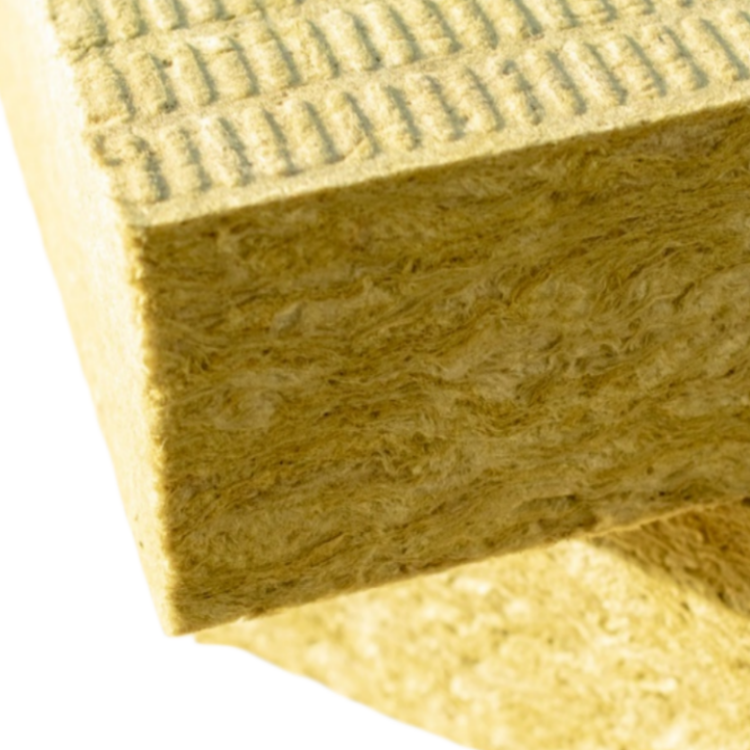
Rockwool sits in a strong middle ground. It gives solid thermal resistance, good sound control, and real fire protection at a reasonable cost. Some jobs need more than that middle ground offers. Research on vacuum insulation panels shows they reach roughly one-fifth the thermal conductivity of standard mineral wool, so a thin panel can replace a much thicker layer of Rockwool. Data on aerogel insulation shows a similar gap, with thermal conductivity running near half that of Rockwool, which helps in tight mechanical spaces like pipe runs. These advanced materials cost far more per square meter, though. I also compare Rockwool against other mineral wool products, including glass wool boards from factories such as Xiaolong, where fiber diameter and binder quality shape long-term acoustic results. For most walls, roofs, and floors, Rockwool still gives the best balance of price and performance.
| Material | Thermal Conductivity (W/m·K) | Best Use |
|---|---|---|
| Rockwool | 0.035 – 0.040 | Walls, roofs, fire barriers |
| Glass Wool | 0.032 – 0.040 | Lightweight walls, ductwork |
| Aerogel Blanket | 0.015 – 0.021 | Tight mechanical spaces |
| Vacuum Insulation Panel | 0.004 – 0.007 | Extreme space constraints |
What Happens If Rockwool Gets Wet?
Water and insulation rarely mix well. Buyers worry that a wet Rockwool board means a ruined wall or roof.
Rockwool does not wick water deep into its body. Bulk water mostly drains off the surface. If the board becomes damp, it can dry out and keep its original thermal performance, as long as it is not left fully saturated for a long time.
How Rockwool Responds to Moisture
I get calls about wet Rockwool after storms and roof leaks. The material handles this better than most buyers expect. Official guidance on moisture resistance confirms that stone wool is vapor permeable and does not trap water inside its fiber structure the way some organic materials do. Once the water source stops and airflow returns, the board dries and returns close to its original R-value. Full saturation is a different problem. If Rockwool sits underwater or stays soaked for weeks, below grade or under a failed membrane, drying alone may not be enough. At that point, I check compressive strength and facing condition before reusing the board. On a normal job site, brief rain exposure before the roof or cladding goes on is rarely a reason to replace the material. Long-term saturation is the real concern, not a damp afternoon.
Does Rockwool Insulation Get Moldy?
Mold worries many homeowners. A damp wall cavity brings up the same question every time.
Rockwool itself does not feed mold, because it is an inorganic material with no organic food source. Mold needs dust, dirt, or organic debris to grow. Keeping the board clean and controlling moisture around it prevents mold far more than the insulation choice alone.
Why Mold Needs More Than Rockwool to Grow
Mold spores need food and moisture together. Rockwool fails the food test. Industry testing on mold growth in mineral fiber confirms mineral fiber insulation gives mold nothing to feed on, even under standard fungal test methods. This does not mean a Rockwool wall can never grow mold. Dust settles on any surface over time. Wood framing, paper facings, and drywall all sit nearby, and those materials can feed mold if moisture stays high for too long. I treat Rockwool as a low-risk material, not a risk-free one. Good airflow, a working vapor strategy, and quick drying after any leak matter more than the insulation brand. When I compare mineral wool products, including glass wool ranges from suppliers such as Xiaolong, I look at binder chemistry and dust control, since a cleaner board gives mold even less to work with over the life of the building.
Conclusion
No single board wins every project. Rockwool earns its place through fire safety, acoustic control, and moisture tolerance, while newer materials fit narrower, more demanding needs.
References
1. EWI Store — Rockwool Insulation Ultimate Guide
2. Knauf Insulation — Rock Mineral Wool
3. Wikipedia — Vacuum Insulated Panel
4. SA Materials — Aerogel: A Real-World Comparison With Traditional Industrial Insulation
5. ROCKWOOL — General Questions FAQ
6. Johns Manville — The Facts About Insulation Mold Growth