
Rock Wool Pipe Engineering Selection Guide: How Should I Select the Right Insulation?
When I select insulation for industrial piping, I often see projects focus on upfront material costs. This can lead to higher energy loss and maintenance costs later.
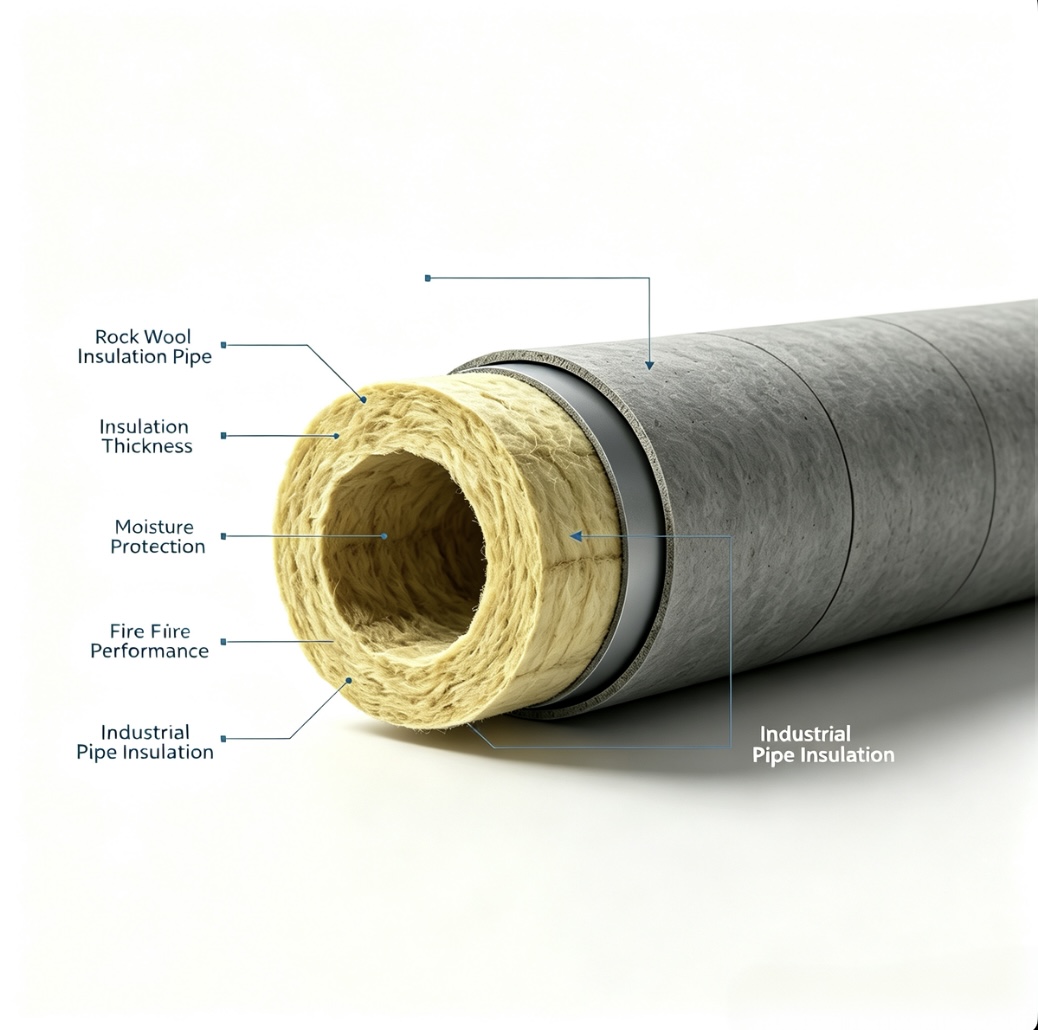
I select rock wool pipe insulation by checking operating temperature, thermal performance, moisture protection, fire performance, and installation conditions. I then match these factors with the actual service requirements of the piping system.I have found that insulation performance depends on more than the material itself. Thickness, joints, jacketing, fittings, and installation quality can all affect the final result.
Best Practices for Selecting Rock Wool Pipe Insulation for Industrial Applications?
When I select rock wool pipe insulation, I first review the actual operating conditions. I check the pipe medium, service temperature, temperature changes, installation environment, and expected service conditions.
For mineral fiber pipe insulation, I use ASTM C547 — Standard Specification for Mineral Fiber Pipe Insulation as an important technical reference. It provides requirements for mineral fiber pipe insulation and helps me identify the main factors that need to be considered during product selection.
I also check whether the piping is installed indoors or outdoors. Moisture, vibration, mechanical impact, and temperature cycling can all affect the long-term performance of an insulation system.
Which Parameters Matter Most?
| Key Factor | What to Check |
|---|---|
| Operating Temperature | Actual service temperature |
| Thermal Performance | Thermal conductivity |
| Thickness | Required insulation thickness |
| Moisture Protection | Jacket and vapor control |
| Fire Performance | Applicable fire requirements |
I do not compare products using one number alone. I look at the complete insulation system and its actual operating conditions.
For industrial piping, I also consider how the insulation will be installed around fittings, joints, valves, and supports. These areas can become weak points if the insulation is poorly fitted or left with gaps.
How to Compare Rock Wool Pipe Insulation Products for Energy Efficiency?
I compare insulation products under actual operating conditions instead of relying only on laboratory thermal conductivity.
ISO 12241:2022 — Thermal Insulation for Building Equipment and Industrial Installations provides calculation principles for thermal insulation used in building equipment and industrial installations. I use this type of engineering approach because the required insulation thickness depends on operating conditions and the target performance.
I also consider the temperature of the pipe and the surrounding environment. A product with good laboratory performance may not provide the expected result if the thickness is insufficient or the installation contains gaps.
The U.S. Department of Energy guidance on insulating steam distribution and condensate return lines also shows why insulation is important for reducing heat loss in steam systems. I use this type of guidance when reviewing energy-efficiency requirements for industrial piping.
Moisture is another issue I check. Wet or damaged insulation can lose part of its intended thermal performance. This makes jacketing and proper installation important, especially in outdoor or moisture-exposed locations.
I also look at the expected service period. A selection that performs well during initial installation should continue to provide stable protection under normal operating conditions.
Where to Find Detailed Engineering Guides on Rock Wool Pipe Insulation?
When I need detailed engineering information, I start with established standards and technical organizations instead of relying only on product marketing materials.
The National Insulation Association — Mineral Fiber Pipe Insulation Resources provides industry information related to mineral fiber pipe insulation and helps me review common engineering considerations.I also refer to ROCKWOOL Technical Insulation — Industrial Pipework when I need additional information about industrial pipe insulation, thermal performance, and application conditions.
For fire-related requirements, I check the applicable project specification and local regulations. Fire performance can depend on the complete insulation system, including the insulation material, facing, and installation method. I therefore avoid using one general fire-performance statement for every project.When I evaluate a large industrial piping project, I normally collect several basic details before selecting the product. These include operating temperature, pipe dimensions, installation environment, insulation thickness, moisture exposure, fire requirements, and installation conditions.
I also discuss the actual project conditions with the supplier. This helps me avoid selecting a standard product that does not match the requirements of the piping system.
Conclusion
I select rock wool pipe insulation by combining operating conditions, thermal performance, moisture protection, fire requirements, and installation quality rather than relying on one specification.
References
ASTM International. ASTM C547 — Standard Specification for Mineral Fiber Pipe Insulation.
ISO. ISO 12241:2022 — Thermal Insulation for Building Equipment and Industrial Installations.
U.S. Department of Energy. Insulating Steam Distribution and Condensate Return Lines.
National Insulation Association. Mineral Fiber Pipe Insulation Resources.
ROCKWOOL Technical Insulation. Industrial Pipework Technical Resources.