Reinforced TPO Waterproofing Membrane Selection Guide: How Do I Choose the Right One?
A poor TPO membrane choice can increase installation problems, maintenance work, and long-term roofing costs. I focus on project conditions before comparing prices.I choose a reinforced TPO waterproofing membrane by looking at the roof structure, substrate, climate, installation method, reinforcement, seam welding, expected service life, and total project cost. I do not rely on one datasheet value alone.
When I select roofing materials, I often find that buyers start with thickness and price. These numbers are easy to compare, but they do not tell me how a membrane will perform during installation or after years of outdoor exposure. ASTM D6878/D6878M-26 covers reinforced TPO sheet roofing and includes properties such as thickness, breaking strength, elongation, tear resistance, heat aging, dimensional change, seam strength, and weather resistance.For me, the better approach is to connect these technical properties with the actual roof. I first ask where the membrane will be installed, how the roof will be attached, what weather it will face, and what level of service life the project requires.
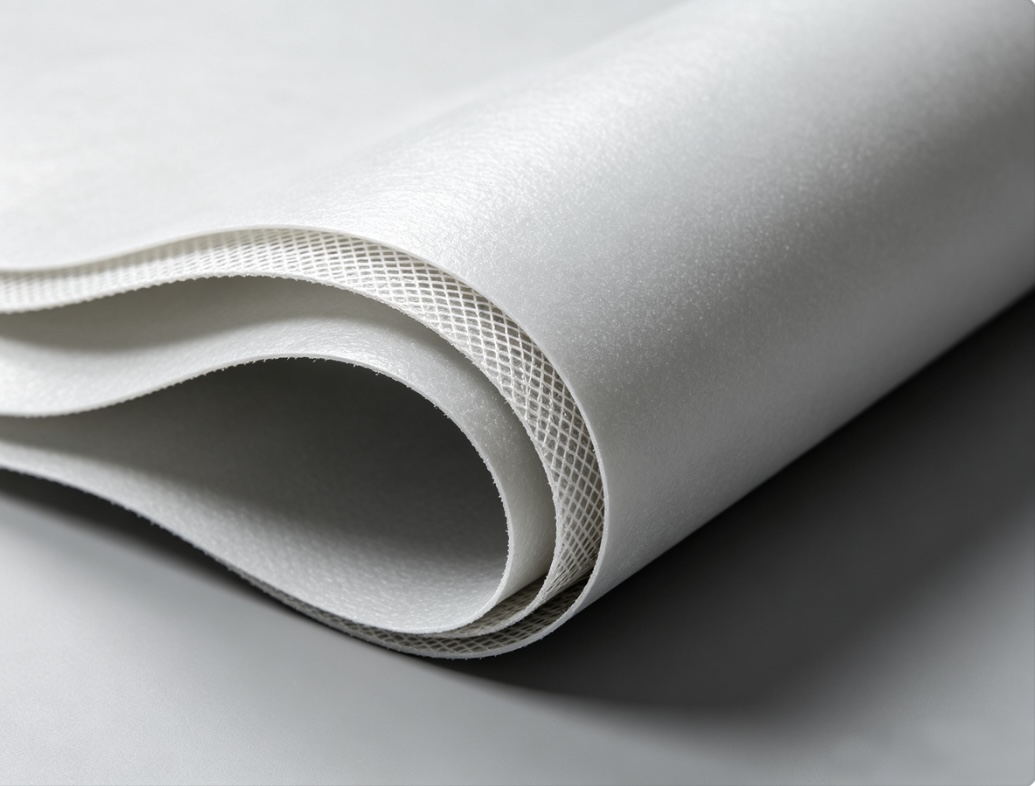
What makes a reinforced TPO membrane suitable for commercial roofing?
Commercial roofs often cover large areas, so I pay close attention to reinforcement, membrane consistency, seam welding, and installation efficiency. I do not treat every commercial roof as the same project.
A reinforced TPO membrane contains a reinforcing fabric or scrim within the sheet. The ASTM specification also requires the material to be suitable for heat welding, fusion, or adhesive bonding to create watertight field splices and repairs. This is important to me because the final waterproofing result depends on both the membrane and the quality of the finished seams.
I also look beyond basic tensile strength. Reinforcement, elongation, tear resistance, dimensional stability, and weathering performance all give me useful information when comparing products. The National Roofing Contractors Association has also documented the importance of evaluating TPO membrane performance under actual roofing conditions rather than relying on one property alone.
In my experience, I normally check the following factors before I compare prices:
| Selection Factor | What I Check | Why I Consider It Important |
|---|---|---|
| Thickness | Overall membrane thickness and coating thickness | Helps me compare physical protection |
| Reinforcement | Scrim type and construction | Helps me assess strength and handling |
| Physical Properties | Tensile, elongation and tear resistance | Shows mechanical performance |
| Seam Performance | Welding requirements and seam data | Supports waterproofing continuity |
| Weather Resistance | Heat aging and weathering data | Helps me assess outdoor exposure |
| Installation | Attachment method and site conditions | Connects the membrane with the roof system |
| Total Cost | Material, labor, maintenance and replacement | Gives me a more realistic project cost |
I use this type of checklist because a membrane specification is only one part of the roof system. ASTM also makes clear that factors such as fire resistance, field seaming strength, material compatibility, and uplift resistance need to be considered at the roof-system level.
How do I choose a reinforced TPO membrane for flat roof waterproofing?
A flat or low-slope roof needs more than a membrane with good basic physical properties. I first look at the complete roof assembly and the way water will move across the surface.
The Cool Roof Rating Council's Low-Sloped Roofing Product Types resource identifies low-slope roofs as roofs with a slope of less than 2:12 and notes that they are common on commercial buildings. TPO is one of the membrane types used for low-slope roofing applications.
For a flat roof project, I pay close attention to drainage and substrate conditions. A membrane cannot solve problems caused by poor roof design or an unsuitable substrate. I therefore want to understand the roof before I decide which membrane specification makes sense.
The attachment method also matters. A project may use a mechanically attached or adhered system, depending on the roof design and manufacturer's requirements. I check the complete system rather than selecting the membrane separately from the rest of the roof.Climate is another major factor in my selection process. A roof exposed to strong sunlight and high temperatures may have different requirements from a roof exposed to repeated cold-weather cycles. I also consider wind exposure, expected movement, maintenance access, and the condition of the existing roof when working on renovation projects.
Why do I pay so much attention to seam welding?
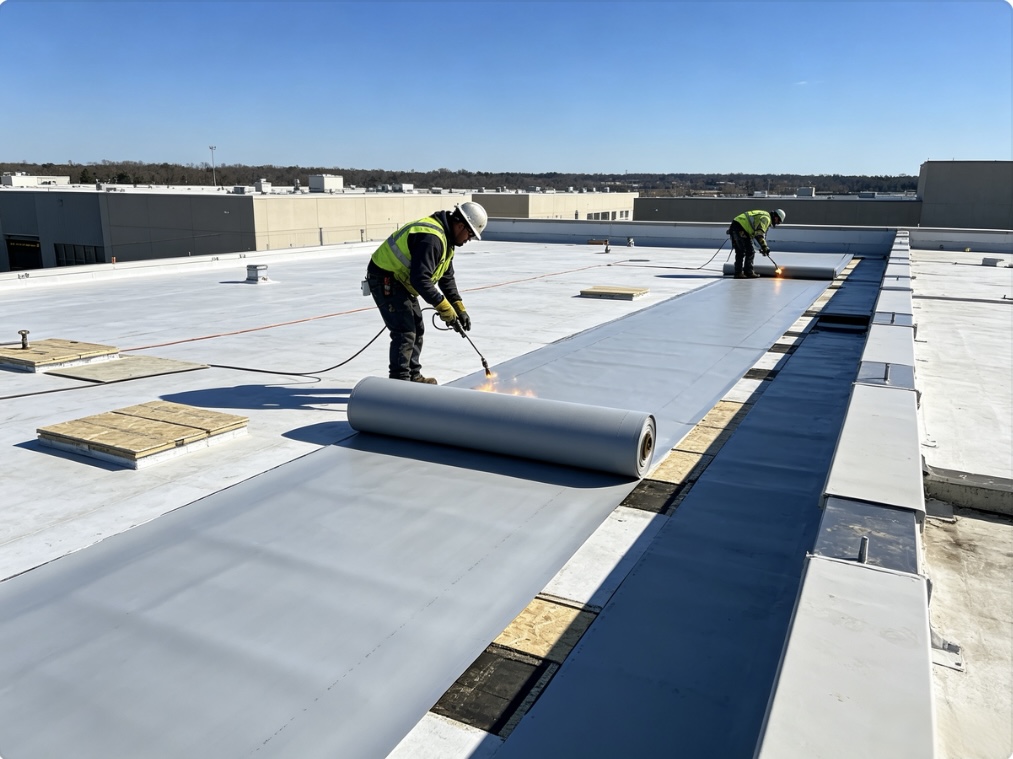
I consider seam welding one of the most important practical parts of TPO installation. A membrane may have good laboratory properties, but the roof still depends on continuous and properly executed seams.
I normally want the installation team to follow the manufacturer's welding requirements and use appropriate equipment and procedures. Weather, membrane preparation, welding temperature, machine speed, and operator experience can all affect the finished seam.
This is why I do not simply choose a membrane with the highest tensile strength. I want a product that the installation team can handle and weld correctly under the actual site conditions.
How do I compare reinforced TPO membranes by durability and cost?
I compare durability and cost together because the lowest purchase price does not always represent the lowest project cost.I first compare the material price. Then I look at labor, accessories, installation time, inspection, maintenance, and possible replacement work. This gives me a better picture of the total investment.I also consider the roof's solar exposure. The U.S. Environmental Protection Agency's guidance on cool roofs explains that roofs with high solar reflectance and thermal emittance can reduce roof temperatures and lower cooling demand in suitable conditions.
For projects where roof reflectance is important, I also check whether the product has appropriate third-party ratings or certifications. The Cool Roof Rating Council provides a product rating system based on properties such as solar reflectance and thermal emittance.I do not use durability as a single number. I look at the combination of physical properties, weathering data, reinforcement, installation requirements, and roof-system design.From my experience, this is also where lifecycle cost becomes useful. A membrane that costs slightly more may still make sense if it fits the installation method, reduces installation difficulties, and provides the performance required by the project. At the same time, I do not recommend paying more for properties that the project does not actually need.
What is my practical approach to reinforced TPO membrane selection?
I normally start with the project instead of starting with the product.I ask what type of building I am working on, what the roof structure looks like, what substrate is available, how the membrane will be installed, and what environmental exposure it will receive. Then I compare thickness, reinforcement, tensile properties, tear resistance, seam requirements, weathering data, and applicable standards.I also check whether the proposed membrane and roof assembly meet the project's required specifications. I do not assume that compliance with a material standard alone proves that the complete roof system will meet every project requirement.
For me, the most useful comparison is not “Which membrane has the best specification?” I ask a more practical question: “Which membrane specification fits this roof, this installation method, and this expected service life?”That approach helps me avoid both unnecessary over-specification and unsuitable low-cost choices.
Conclusion
I select reinforced TPO membranes by matching product properties, roof conditions, installation requirements, durability expectations, and total project cost rather than relying on price alone.
References
[1] ASTM International. ASTM D6878/D6878M-26, Standard Specification for Thermoplastic Polyolefin-Based Sheet Roofing.
[2] National Roofing Contractors Association. Technical research and guidance on thermoplastic polyolefin roofing membranes.
[3] Cool Roof Rating Council. Low-Sloped Roofing Product Types.
[4] U.S. Environmental Protection Agency. Using Cool Roofs to Reduce Heat Islands.
[5] Cool Roof Rating Council. Codes, Programs & Standards.