
What Should Buyers Verify before Specifying a Reinforced PVC Roofing Membrane?
A membrane looks perfect on the quote sheet. Then the seams open and the edges crack. I have seen this too often.
Verify five things before you specify: thickness over the reinforcement, the reinforcement type, test results against ASTM D4434, compatibility with the roof assembly, and the full warranty terms. Check each one against your project, not against price alone.
I have read hundreds of roofing quotes. Most list thickness and price, and nothing else. Below, I show what else I check and why. Read on if you want fewer surprises on site.
Can Two PVC Roofing Membranes with the Same Thickness Perform Differently?
Two rolls both say 60 mil. Yet one can age much faster than the other.
Yes, they can. Total thickness hides how much material sits above the reinforcement, and that layer takes the sun and weather. The standard also allows a 10% tolerance, so a nominal 60-mil sheet can measure about 54 mils.
Thickness above the scrim
I treat thickness over the scrim as the key number. The IIBEC paper on membrane standards notes that D4434 sets a 16-mil minimum for the layer above the scrim. When weather wears that layer down, the scrim shows. Then the membrane starts to fail.
Aging and plasticizer loss
Heat pulls plasticizer out of PVC. The sheet then gets stiff in cold weather. The heat-aging test runs 56 days at 176°F, and the sheet must keep 90% of its tensile strength and elongation. On a school project, I compared two 60-mil quotes. One listed thickness over scrim. The other did not. I asked, and the answer decided the order. The supplier with the thicker top layer cost a little more. I still chose it, because the roof faced strong sun all day. Now I always ask for this number first.

What does the Reinforcement Layer Actually Tell You about a Roofing Membrane?
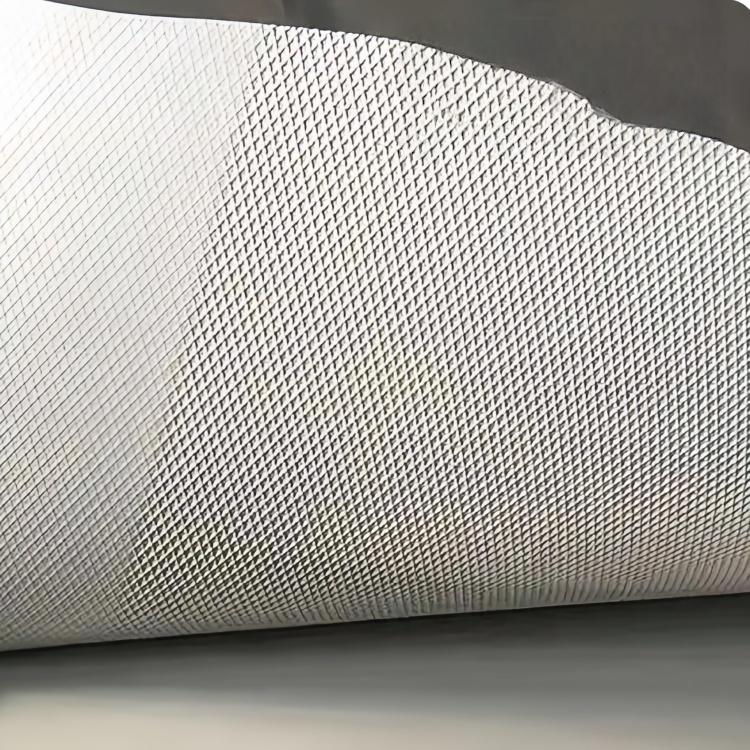
You cannot see the reinforcement. Yet it carries the load when the roof moves.The reinforcement shows how the membrane handles wind, movement, and punctures. Polyester scrim, glass mat, and fleece backing do different jobs. Ask what the reinforcement is, where it sits, and which test results prove it.
Scrim, glass mat, and fleece
The Sarnafil G 410 data sheet lists an integral fiberglass mat. It shows 110 lbf tensile strength against a 55 lbf limit, and 22 lbf tear strength against a 10 lbf limit. I like this format. A sheet that shows results next to the limit tells me more than one that says only "pass". Fleece-backed sheets, such as VersiFleece, add a backing for bonding and puncture protection.
Position and cut edges
A study in the IIBEC paper found that scrim position varies, even inside one plant. That study covered TPO, but I apply the same care to PVC. I ask for thickness-over-scrim data by batch. I also check that exposed scrim at cut edges gets sealed. The specification I reviewed asks for cut-edge sealant after seam probing. Small steps like this keep water out of the sheet. A supplier who knows these steps usually knows the product well.
Could the Roof Assembly Matter More than the Membrane Specification Alone?
A good membrane can still fail on the wrong roof. The cause often sits underneath.
Yes, it can. PVC contains plasticizers, and some materials pull them out. Polystyrene insulation, asphalt, and rubberized asphalt are known problem materials. A separation layer and a planned installation order protect the membrane.
Contact materials
Versico lists non-compatible substrates: EPS, XPS, rubberized asphalt, asphalt, and old PVC. Plasticizers move toward materials that act like unplasticized PVC. With asphalt, they soften it until it flows. Carlisle adds that rubberized asphalt can leave PVC brittle or cracked. Its advice is to separate them with metal or a compatible sealant.
Attachment and workmanship
On one retrofit, a peel-and-stick air barrier touched the membrane at a parapet. The fix cost more than the membrane saving. Nobody had checked the drawings for contact points. I now mark every contact point before the order goes out. A PVC roofing specification asks for an installer with five years of experience on the same work. It also asks for seam probing after the welds cool. I read these lines as a warning. The roof is a system. If one layer is wrong, the best membrane cannot save it.
Which Documents Help You Compare PVC Roofing Membrane Suppliers Fairly?
Brochures all sound alike. Documents do not.
Ask every supplier for the same four documents: a technical data sheet with ASTM D4434 results, third-party approvals, installation details, and the warranty. Compare them line by line. A supplier who sends complete files usually runs a steady factory.
Build one comparison sheet
I put every supplier into the same table. This makes gaps easy to see.
| Document | What I check | Warning sign |
|---|---|---|
| Technical data sheet | Thickness over scrim, tensile, tear, heat aging, weathering | Total thickness only, no limits shown |
| Third-party listings | FM, UL, or code reports that match the product name | Listings for a different product |
| Detail drawings | Flashings, seams, T-joints, edges | Generic sketches |
| Warranty | Term, thickness rules, attachment rules, exclusions | Terms that change with each quote |
Ask for batch records
In my work with the Xiaolong team, I notice that buyers who ask for batch-level reports get clearer answers. The report lets you match test results to the roll on your site. It also shows how steady the factory is from one lot to the next. I weigh this as much as the price. A supplier who hides lot data is a risk.
When is a Lower-Cost Roofing Membrane No Longer the More Economical Option?
The cheapest quote wins the meeting. Years later, it can lose the budget.
A lower price stops saving money when it brings higher repair costs, a shorter service life, or a weaker warranty. Compare cost per year of service. Include installation, maintenance, and replacement, not just the price per square meter.
Count the whole cost
Warranty terms show how this works. The same ARCAT specification lists warranties from 5 to 30 years. Eligibility depends on membrane thickness and attachment method. The 30-year option covers only 80-mil PVC and one fleece-backed product. A thinner sheet can therefore cap your coverage before the roof is even installed. Optional riders for punctures and hail also exist. Each rider has its own limits, so I read them with care before I count them as value.
Where cheap sheets cost more
Labor, access, and tear-off cost the same, whatever membrane goes on. So a short-lived sheet repeats the largest costs sooner. The IIBEC paper also notes that long-term failure usually comes from cracking, erosion, or punctures, not from low strength. I use one formula: total installed cost plus expected repairs, divided by years of service. The lowest quote rarely wins this test. Try it on your next bid and see.
What Should You Confirm before Approving a Reinforced PVC Roofing Membrane?
Approval is the last cheap moment to fix a mistake. After delivery, every fix costs more.
Confirm the thickness over scrim, ASTM D4434 results, substrate compatibility, seam method, warranty scope, and installer experience. Get each item in writing and match it to your project conditions.
Seams and mock-ups
Seams decide whether a PVC roof stays watertight. The Sarnafil sheet describes hot-air welded side laps of 3 inches. Its seam test passes when the break happens in the membrane, not in the seam. The specification asks installers to repair seam faults the same day. I also ask for a mock-up when the detail work is complex. A mock-up lets the team check surface preparation, welding, and finish before the full roof starts. It is cheap and fast.
Final check in writing
Before I sign off, I want the data sheet, the listings, the compatibility plan, the seam method, and the warranty terms in one file. If one item is missing, I hold the approval. This habit takes an hour. It has saved me weeks. I also ask the installer to sign the same list, so everyone works from one set of facts. That step removes most of the arguments later.
Conclusion
ok past thickness and price. Match documented performance to your roof, check compatibility and seams, and count lifetime cost. This makes supplier comparisons fair and cuts avoidable risk. Request the technical data sheet for our reinforced PVC roofing membrane for your next project.
References
1.ASTM International. Standard Specification for Poly(Vinyl Chloride) Sheet Roofing, D4434/D4434M-21.
2.McGroarty and Taylor. Paper on single-ply membrane standards, IIBEC, 2017.
3.Sika Sarnafil. Sarnafil G 410 80 Textured product data sheet.
4.ARCAT. Section 07 54 19, PVC Membrane Roofing, Versico Roofing Systems specification.
5.Versico Roofing Systems. Non-Compatible Substrates for PVC, 2020.
6.Carlisle SynTec Systems. SpecTopics: PVC Roofing Membrane and Rubberized Asphalt, 2022.