Product Overview
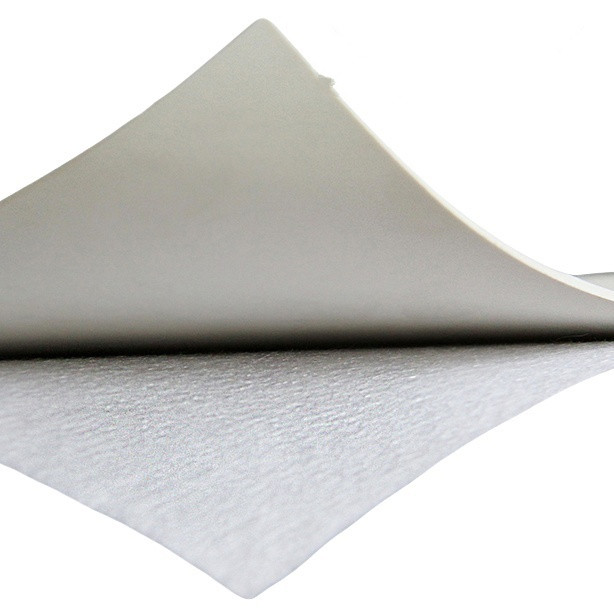
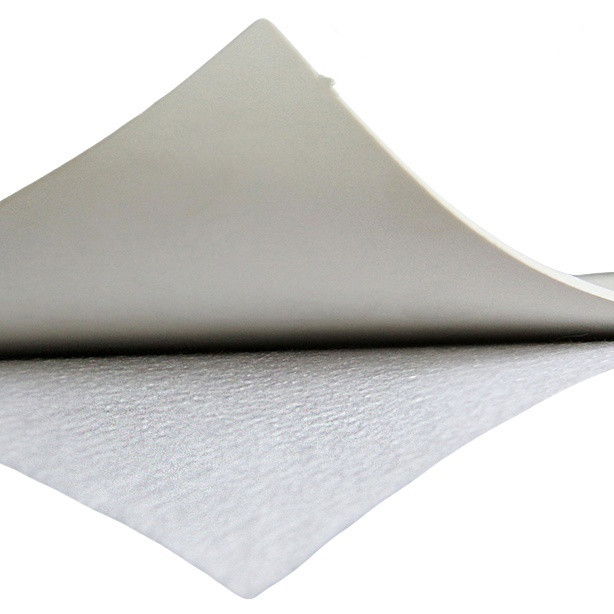
Backed PVC waterproof membrane is a heat-weldable single-ply sheet with a polyester fleece fabric laminated to the underside. The fleece backing is designed to absorb adhesives, enabling strong, uniform bonding to concrete, metal, and other substrates for fully adhered waterproofing systems.
Suited for fully adhered roofing and waterproofing applications, it provides reliable waterproofing on concrete decks, metal roofs, and other structural substrates. The PVC matrix offers weather, UV and chemical resistance for long-term service.
Available in 1.2–2.0 mm thickness; standard roll widths 1.0 m / 2.0 m, lengths 20–25 m. Custom sizes and smooth light-colored finishes are available subject to production feasibility. Our team reviews drawings solely to assess production feasibility and does not undertake engineering design or system selection.
Product Features
1. Polyester fleece backing
A non-woven polyester fleece fabric is laminated to the underside of the membrane during production. The fleece backing is designed to absorb adhesives, enabling strong, uniform bonding to concrete, metal, and other substrates. The backing also provides a cushioning layer that helps protect the membrane from minor substrate irregularities and installation damage.
2. Weather and UV resistance
The PVC base material offers resistance to weathering, ultraviolet radiation, and aging. The material remains flexible at low temperatures and maintains mechanical strength at elevated temperatures. These characteristics refer to laboratory material-level performance; actual field performance is subject to project-site conditions. Light-colored surfaces also reflect solar radiation.
3. Heat-weldable seams
Adjacent membrane sheets are joined by hot-air welding to form integrated seams. The sealing performance of welded joints relies on proper on-site welding workmanship and complete system detailing.
4. Full adhesion capability
The fleece backing allows the membrane to be fully adhered to the substrate using compatible adhesives. Bond performance is dependent on compatible adhesive selection, substrate condition and project wind-load design.
Surface and Color Options
Backed PVC waterproof membrane is available in various surface finishes and colors. Available options include:
| Option Type | Description |
|---|---|
| Standard White | Smooth, light-colored reflective surface; reduces heat absorption |
| Light Gray | Alternative light color for specific aesthetic requirements |
| Smooth Finish | Standard smooth surface; facilitates hot-air welding |
| Custom Color | Available subject to minimum order quantity and production feasibility |
Please specify the required surface type and color when submitting your inquiry.
Technical Specifications
The following table shows the available manufacturing range for backed PVC waterproof membrane. Final dimensions and packaging are confirmed according to order requirements and production feasibility.
| Parameter | Available Range |
|---|---|
| Thickness | 1.2 mm, 1.5 mm, 1.8 mm, 2.0 mm |
| Roll Width | 1.0 m / 2.0 m (standard); custom widths available |
| Roll Length | 15 m / 20 m / 25 m (standard) |
| Backing | Polyester fleece (laminated to underside) |
| Surface Finish | Smooth |
| Color | White / light gray / custom (per order) |
Other dimensions may be available subject to production feasibility and minimum order quantity.
Applications
Backed PVC waterproof membrane is suitable for waterproofing applications across the following areas:
1. Commercial and Industrial Roofing
Fully adhered single-ply roofing systems
New roof construction and re-roofing projects
Roofs on concrete and metal decks
Low-slope and flat roof systems
2. Public and Institutional Buildings
Schools, hospitals, and government buildings
Airport terminals and transportation facilities
Logistics and warehouse facilities
3. Green and Specialty Roofs
Green roofs and roof gardens (root-resistant performance shall be separately specified and confirmed in project documents)
Terraces and balcony waterproofing
Pedestrian traffic areas
4. Below-Grade and Infrastructure
Underground garage waterproofing
Tunnels and urban utility tunnels
Tank lining and reservoir waterproofing
Note: Our service executes fabrication strictly to customer-provided specifications. The product is supplied as a waterproofing membrane; final system design, adhesive selection, flashing details, wind load calculations, and code conformity must be verified by the project owner and their qualified engineering team. We do not provide engineering certification or compliance validation for specific applications.
Customization and Packaging
Thickness, roll width, roll length, surface color, product labeling, and outer packaging are all configurable per order and finalized before production.
Each roll is protected with suitable wrapping according to its size. Container stowage plans are prepared per order to avoid transit damage and control freight costs.
MOQ: Quoted based on specifications and order volume
Sample availability: Membrane samples are available on customer‘s request
Production lead time: Determined by specifications and order size
Packaging: Protective wrapping / cardboard cores / palletized where required / final packaging arranged per order
OEM labeling: Offered upon request
FAQ
Q1. What is backed PVC waterproof membrane?
It is a heat-weldable single-ply sheet with polyester fleece laminated to the underside for adhesive bonding to concrete, metal, and other substrates.
Q2. What is the difference between backed and reinforced PVC waterproof membrane?
Backed PVC has fleece on the underside for fully adhered systems. Reinforced PVC has fabric/mesh inside for mechanical strength in mechanically fastened systems.
Q3. How are backed PVC waterproof membrane seams sealed?
Seams are joined by hot-air welding. Sealing performance depends on on-site welding quality and proper detailing.
Q4. Where is backed PVC waterproof membrane typically used?
Fully adhered roofing on concrete/metal decks, green roofs, terraces, underground garages, tunnels, and reservoirs.
Q5. What is the low-temperature flexibility of backed PVC waterproof membrane?
It remains flexible at –25°C under lab conditions. Actual on-site performance depends on local climate and should be evaluated by the project engineer.
Request a Quote
Have project specifications and membrane requirements ready? Our technical team can review your documentation to assess production feasibility based on our shop capabilities.
We will confirm the available specifications, pricing, production lead time, and estimated shipping arrangements based on your requirements.