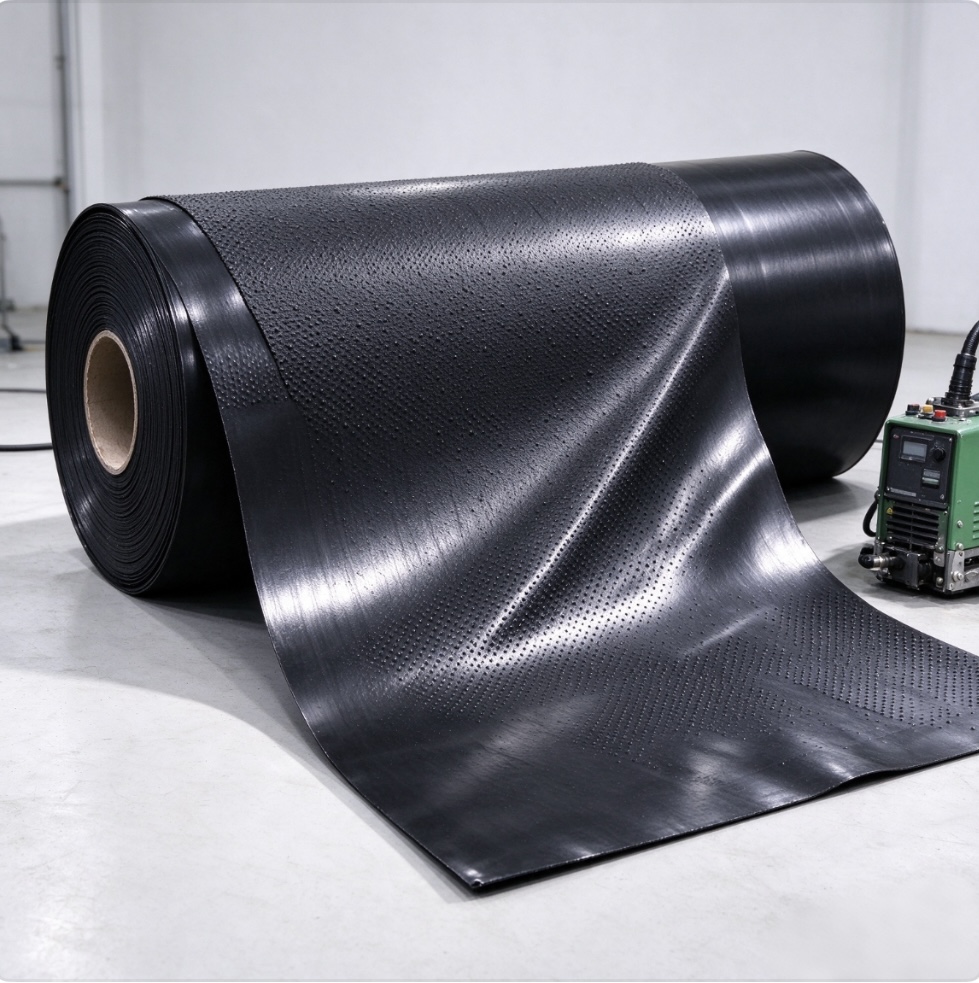
Textured HDPE Geomembrane for Slopes
Textured HDPE geomembrane for slopes is designed for containment projects requiring seepage control and improved interface friction. Its roughened surface can increase friction with adjacent materials under suitable conditions, making it an option for landfill slopes, mining facilities, and reservoir embankments. Jinsimai provides HDPE geomembrane solutions for different project requirements.
Key Benefits of Textured HDPE Geomembrane
Improved Interface Friction
The textured surface can improve friction between the geomembrane and adjacent materials. This is important in sloped lining systems where interface properties influence overall stability. Actual performance depends on surface texture, contact materials, and site conditions.
Reliable Seepage Control
HDPE geomembrane provides a low-permeability barrier when properly installed and welded. It helps limit liquid migration in containment systems used for waste management, mining, and water storage.
Flexible Surface Options
Depending on product availability, textured HDPE geomembranes may feature single-sided or double-sided textures. The appropriate option depends on which interfaces require additional friction and the design of the complete lining system.
Outdoor Application Potential
HDPE geomembranes can be used in outdoor projects. UV exposure, chemical contact, and operating conditions should be considered when selecting the product formulation.
How to Select Textured HDPE Geomembrane for Slopes
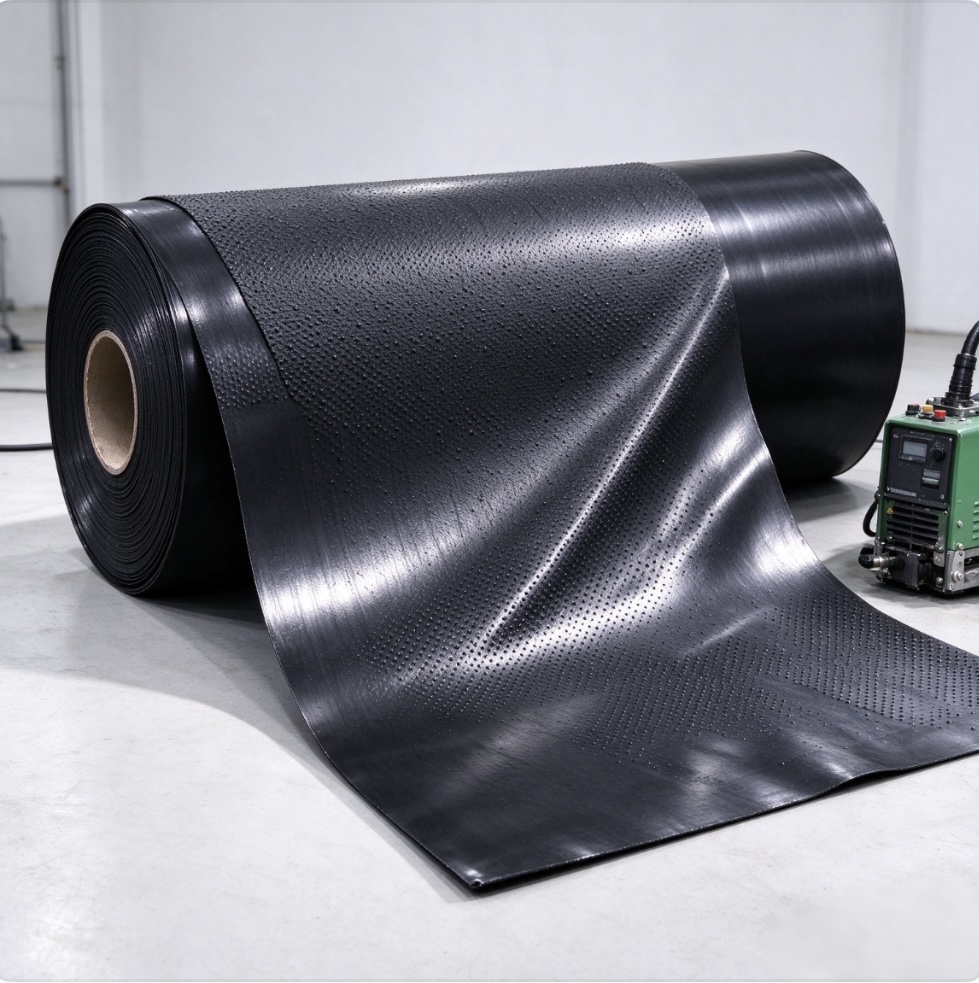
Selecting a suitable geomembrane requires more than checking whether its surface is rough. Engineers should evaluate the materials that will contact the liner and how these interfaces behave under expected conditions.
When the geomembrane contacts soil, soil type, compaction, moisture, and slope angle can influence interface performance. When geotextiles or drainage composites are used, their interaction with the geomembrane should also be considered.
Single-sided and double-sided textures may suit different system configurations. For critical slopes, interface shear testing can help assess the compatibility of the selected materials. Anchorage, drainage, and slope geometry must also be included in the engineering design because surface texture alone cannot guarantee slope stability.
Product Specifications
|
Parameter |
Description |
|
Material |
High-density polyethylene (HDPE) |
|
Surface Type |
Textured |
|
Texture Configuration |
Single-sided or double-sided, subject to availability |
|
Thickness |
Selected according to project requirements |
|
Roll Width |
Confirm according to available specifications |
|
Main Function |
Seepage control and improved interface friction |
|
Welding Method |
Selected according to product and installation requirements |
|
Chemical Resistance |
Confirm compatibility with expected exposure |
Please confirm available dimensions, mechanical properties, and applicable standards against the product datasheet and project specifications. Interface shear performance should be verified where required.
Installation Considerations
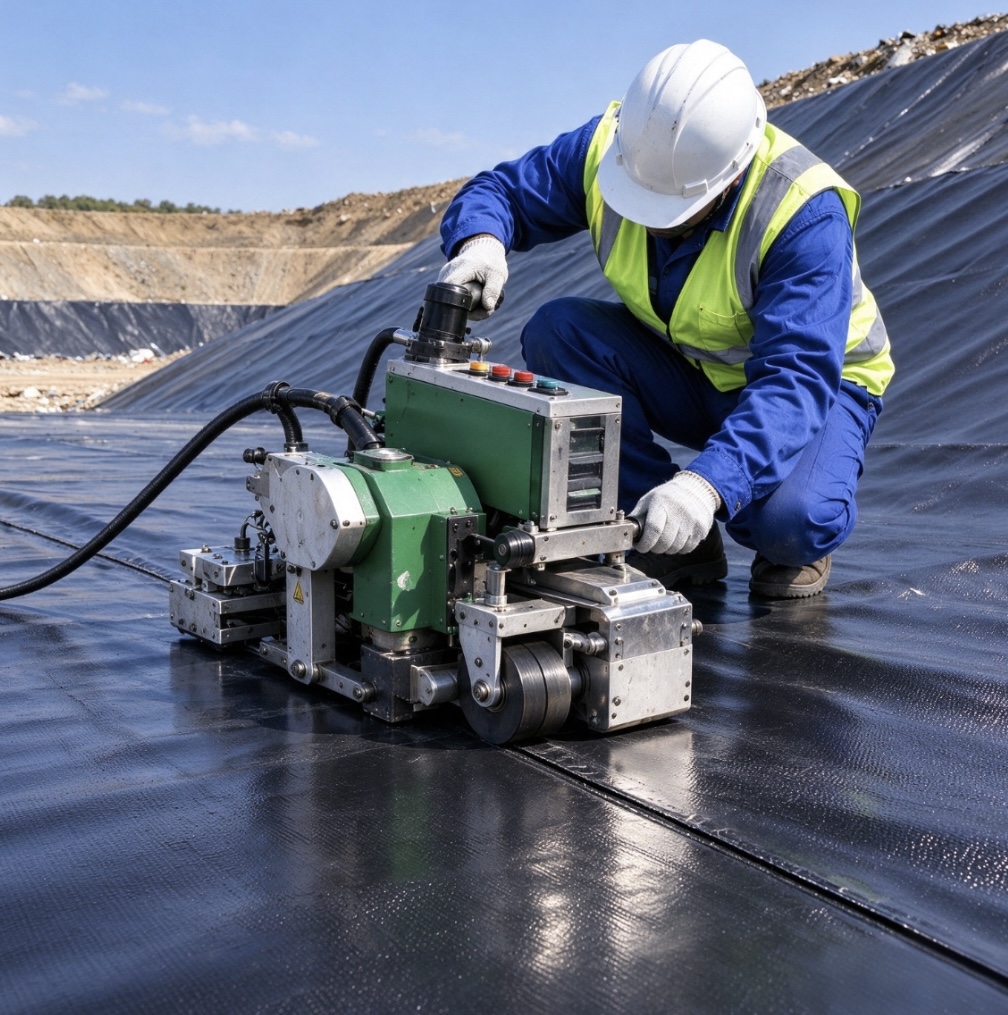
Before installation, prepare the subgrade according to the engineering design and remove sharp objects or unsuitable protrusions that could damage the liner.
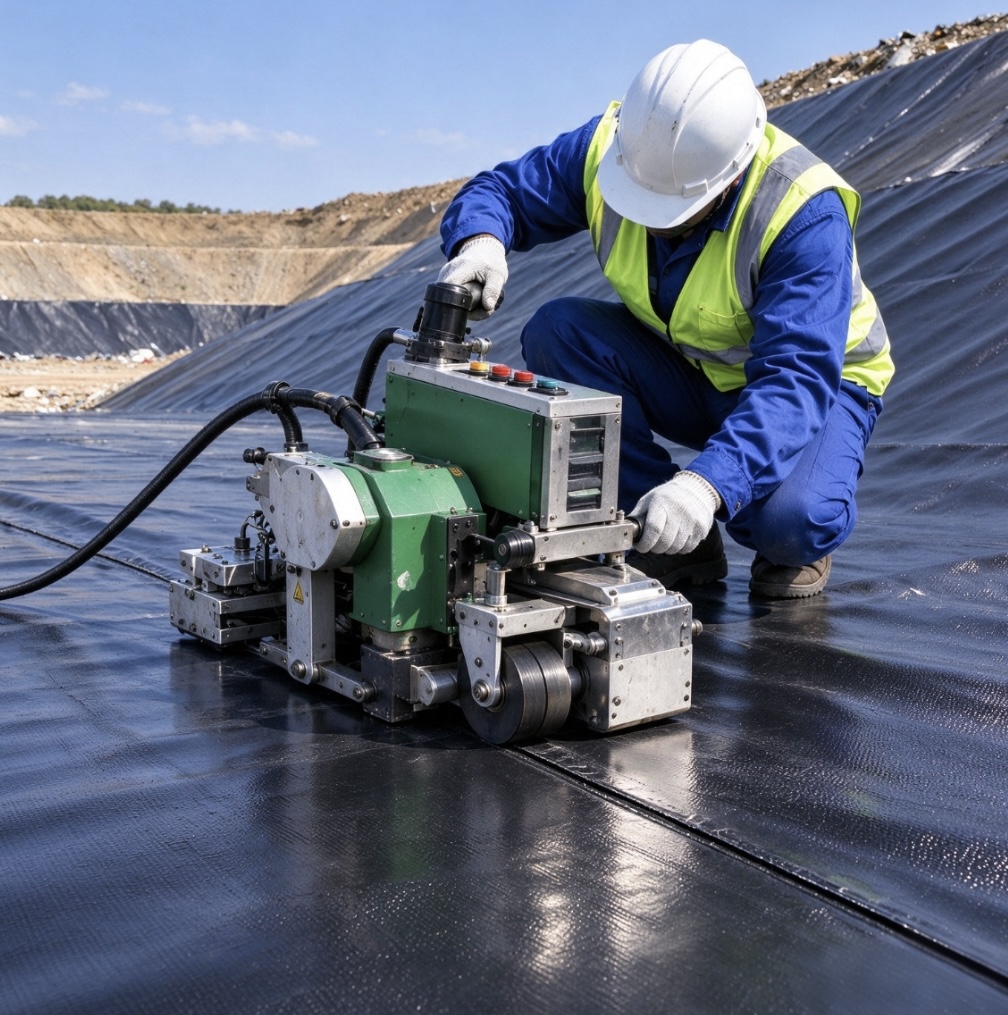
Position the geomembrane according to the approved layout, paying attention to panel alignment and anchorage at the slope crest and toe where specified. Weld seams using a suitable method and inspect completed joints according to project quality requirements.
Drainage and protective layers should be installed as designed. For steep or technically demanding slopes, follow the project engineer's installation specifications.
Frequently Asked Questions
1. What is textured HDPE geomembrane used for?
It is used in containment systems where seepage control and interface friction are important, including landfill slopes, mining facilities, and reservoir projects.
2. Is single-sided or double-sided texture better?
The choice depends on the materials contacting each side of the liner and the project's friction requirements. Confirm the suitable configuration with the project designer.
3. Can textured geomembrane prevent slope failure?
Not by itself. Slope stability also depends on interface shear strength, anchorage, drainage, slope geometry, and surrounding materials.
4. What information is needed for a quotation?
Provide the application, slope area, required thickness, preferred texture configuration, quantity, and delivery destination.
Request a Quote
Looking for textured HDPE geomembrane for slopes? Contact Jinsimai with your project specifications to discuss available surface configurations, dimensions, and supply options.