Product Overview
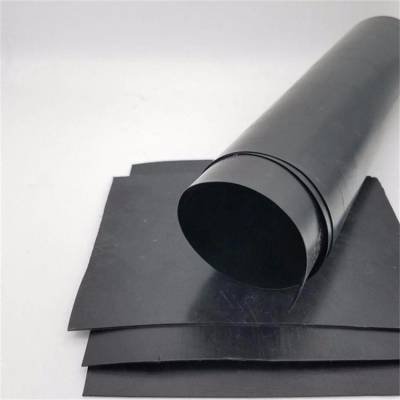
HDPE geomembrane is a high-density polyethylene waterproofing sheet manufactured from polyethylene resin, with carbon black, antioxidants, and anti-aging additives incorporated for UV resistance and long-term durability. It serves as a low-permeability barrier to control fluid migration in containment systems.
The product addresses the need for reliable containment and waterproofing in environmental, civil, and mining projects where resistance to chemicals, punctures, and environmental stress cracking is required. Its high-density molecular structure provides excellent chemical resistance and mechanical strength.
Typical installations include landfill liners and covers, mining heap leach pads, pond and reservoir liners, wastewater treatment lagoons, and canal lining systems.
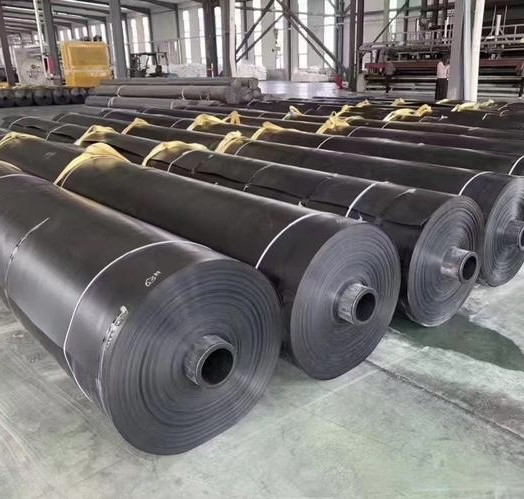
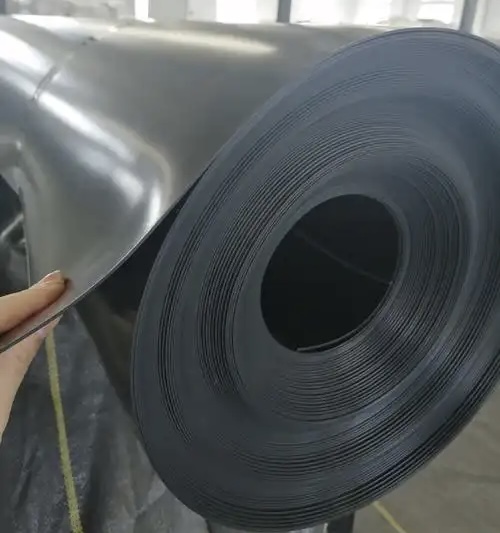
Available in thicknesses from 0.3 mm to 3.0 mm, with roll widths from 1.0 m to 8.0 m and roll lengths from 50 m to 100 m as standard. Smooth and textured surface options are available. Custom sizes can be produced subject to production feasibility. Our team reviews drawings solely to assess production feasibility and does not undertake engineering design or system selection.
Product Features
1. Very low permeability
The dense molecular structure provides extremely low hydraulic conductivity, effectively blocking liquid migration in containment systems.
2. Chemical and UV resistance
The material resists a wide range of chemicals, acids, and alkalis encountered in industrial and environmental applications. Carbon black and antioxidant additives provide UV protection for exposed applications.
3. Puncture and tear resistance
The sheet offers good puncture resistance and tear strength, with sufficient tensile strength to withstand installation stresses and service loads.
4. Dimensional stability
The material maintains stable dimensions under temperature fluctuations and resists environmental stress cracking, contributing to long-term service performance.
Surface and Color Options
HDPE geomembrane is available in various surface finishes and colors. Available options include:
| Option Type | Description |
|---|---|
| Smooth Surface | Standard smooth finish on both sides; provides lowest permeability |
| Textured Surface | Single or double-sided textured surface; reduces slippage of adjacent materials |
| Standard Black | Industry-standard black color with carbon black for UV protection |
| Custom Color | Available in white, green, blue, or other colors subject to minimum order quantity |
Please specify the required surface type and color when submitting your inquiry.
Technical Specifications
The following table shows the available manufacturing range for HDPE geomembrane. Final dimensions and packaging are confirmed according to order requirements and production feasibility.
| Parameter | Available Range |
|---|---|
| Thickness | 0.3 – 3.0 mm |
| Roll Width | 1.0 – 8.0 m (standard); custom widths available |
| Roll Length | 50 – 100 m (standard); custom lengths available |
| Surface | Smooth / single-textured / double-textured |
| Color | Black (standard) / white / green / blue / custom |
| Density | ≥ 0.94 g/cm³ |
Other dimensions may be available subject to production feasibility and minimum order quantity.
Applications
HDPE geomembrane is suitable for containment and waterproofing applications across the following areas:
1. Environmental and Waste Management
Landfill liners and caps
Solid waste containment facilities
Hazardous waste storage areas
Gas collection covers
2. Mining and Industrial
Heap leach pads and tailings ponds
Chemical and acid solution ponds
Ash storage yards and sedimentation tanks
3. Water and Civil Engineering
Reservoir and pond liners
Canal and irrigation lining
Wastewater treatment lagoons
4. Agriculture and Aquaculture
Animal waste lagoons
Aquaculture ponds and fish farming
Irrigation reservoirs
Customization and Packaging
Thickness, roll width, roll length, surface type, color, product labeling, and outer packaging are all configurable per order and finalized before production.
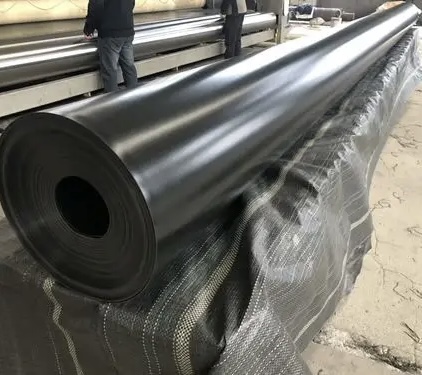
Each roll is protected with suitable wrapping according to its size. Container stowage plans are prepared per order to avoid transit damage and control freight costs.
MOQ: Quoted based on specifications and order volume
Sample availability: Material samples are available on customer's request
Production lead time: Determined by specifications and order size
Packaging: Protective wrapping / cardboard cores / palletized where required / final packaging arranged per order
OEM labeling: Offered upon request
FAQ
Q1. What roll widths and lengths are available?
Standard widths 1.0 m to 8.0 m, lengths 50 m to 100 m. Custom sizes available subject to MOQ.
Q2. What is the MOQ for HDPE geomembrane?
Quoted based on thickness, width, and total order volume. Contact us with your specifications for a confirmed MOQ.
Q3. How are rolls packed for shipment?
Each roll is wrapped with protective film, with optional cardboard cores and palletizing. Packing is confirmed per order.
Q4. What is the production lead time?
Typically 15–30 days depending on order quantity and specifications. Confirmed upon order placement.
Q5. Can rolls be labeled with my brand?
Yes. OEM labeling and custom packaging are available upon request.
Request a Quote
Have project specifications and geomembrane requirements ready? Our technical team can review your documentation to assess production feasibility based on our shop capabilities.
To receive an accurate quotation, please provide:
Required thickness
Required roll width and length
Surface type (smooth / textured)
Color requirement
Quantity
Packaging requirement
Destination port
We will confirm the available specifications, pricing, production lead time, and estimated shipping arrangements based on your requirements.