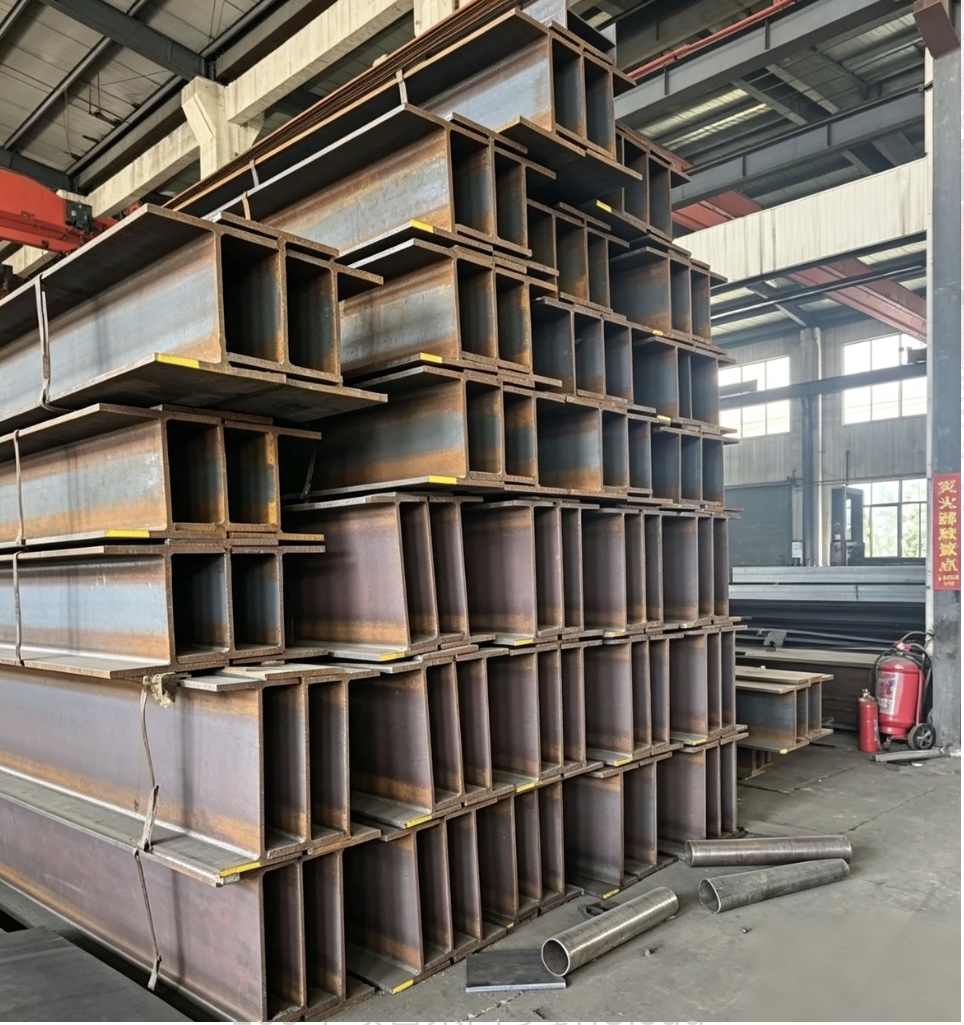
Structural Steel H Beam for Building Frames, Factories, Bridges and Heavy-Duty Platforms
Built for Structural Demands: H Beam Steel Supplier for Construction Projects
A frame is only as reliable as the sections carrying it. Xiaolong supplies structural steel H beam with wide, parallel flanges that carry heavy loads with less steel and bolt up cleanly on site. Our sections are produced for stable dimensions and consistent quality, so your fabricators and erection crews can work without surprises. Discuss your steel section requirements with our team.
Wide-Flange Geometry for Reliable Load Distribution
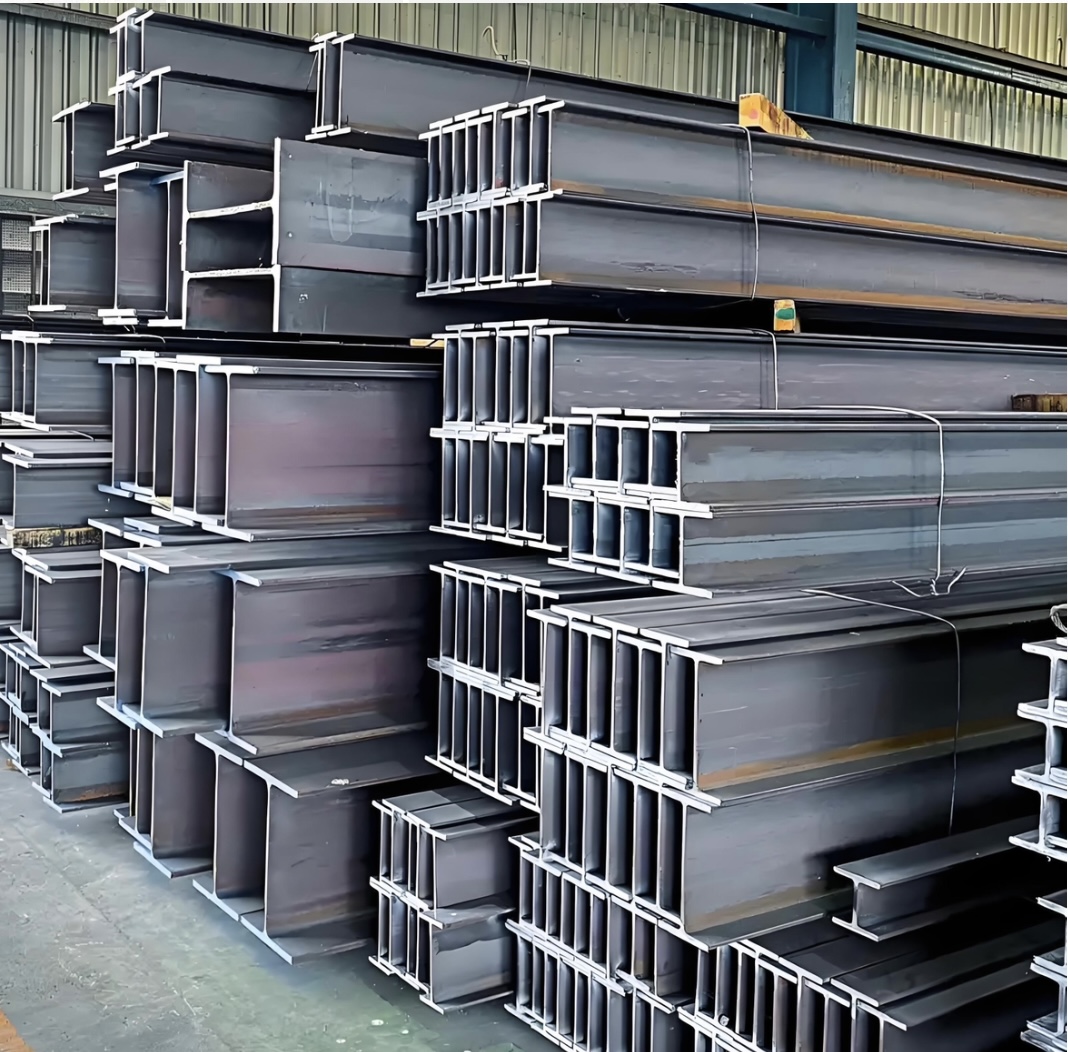
Wide, Parallel Flanges
Flat, parallel flange faces take standard bolts and plates directly, with no tapered washers needed at connections.
Wide flanges give the section good stability against sideways buckling when it is properly braced.
Efficient Load Distribution
The flanges carry most of the bending stress, while the web resists shear, so material sits where it works hardest.
For long floor spans, deflection usually governs before strength does. A deeper section often works better than a heavier one of the same depth.
Column and Beam Versatility
Wide-flange series suit columns because flange width is close to section height, giving similar stiffness in both directions.
Narrower-flange series suit beams and girders where bending in one direction dominates.
Fabrication Compatibility
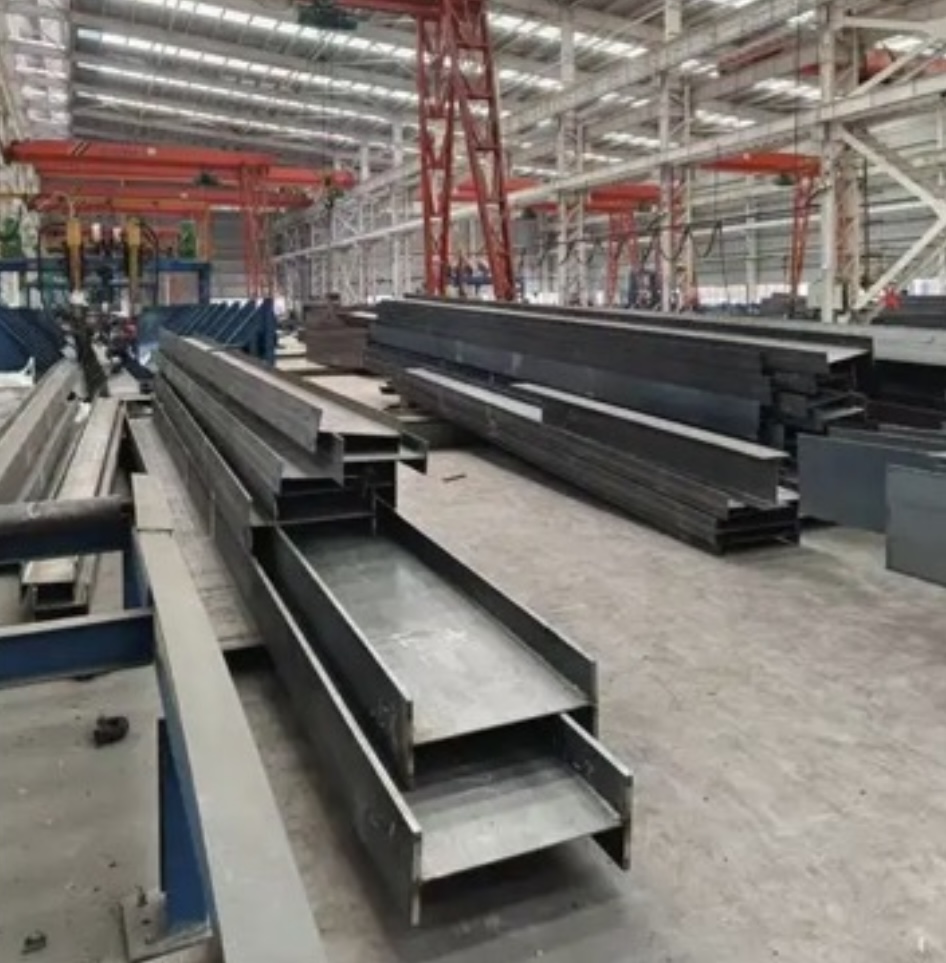
The structural steel H beam cuts, drills, welds and bolts with common shop equipment, which keeps fabrication simple.
Keep welds and bolt holes away from areas of peak bending, and allow for the root radius where web meets flange.
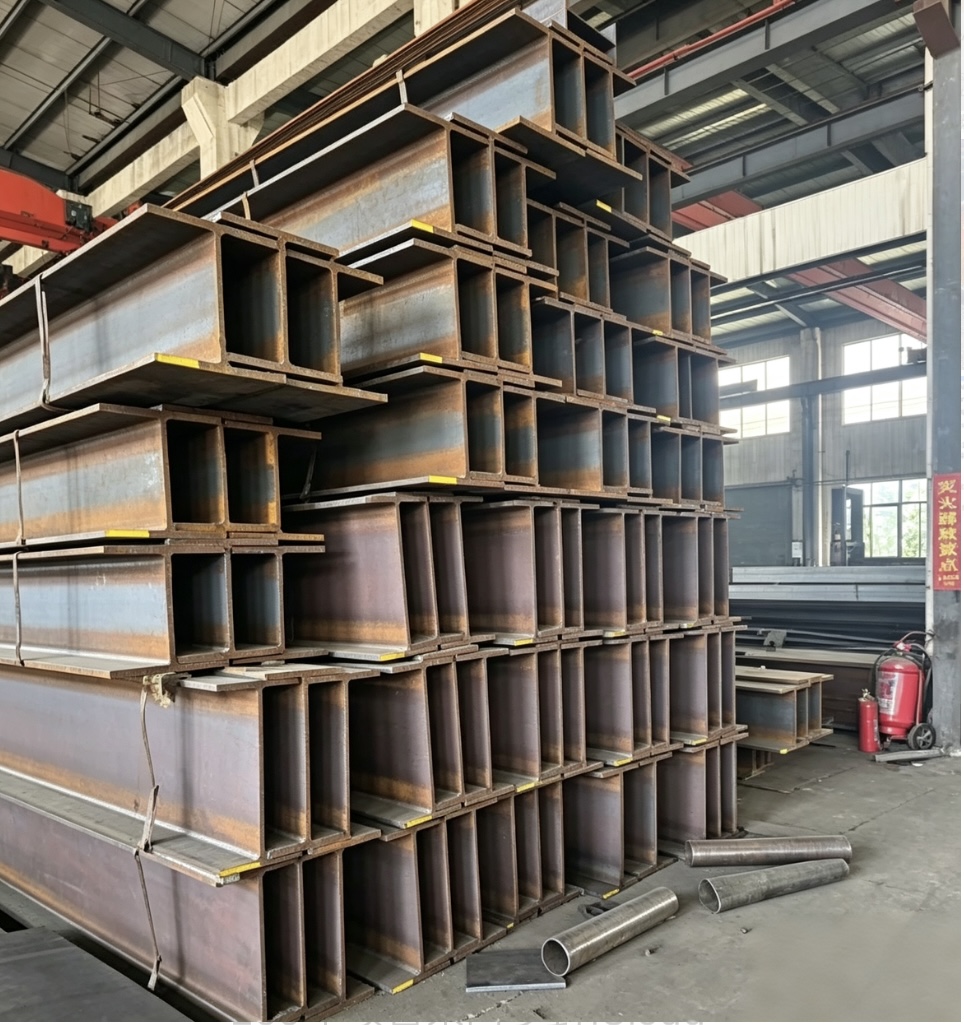
Structural Steel H Beam Sizes and Technical Data
| Parameter | Specification |
|---|---|
| Cross-Section | H-Shaped |
| Steel Grade | Available in Multiple Grades |
| Section Height | Varies by Section Series |
| Flange Width | Varies by Section Size |
| Web Thickness | Depends on Section Specification |
| Flange Thickness | Depends on Section Specification |
| Standard Length | Commonly 6 m, 9 m, or 12 m |
| Surface Condition | Mill Finish |
Select by section modulus and stiffness, not by weight alone. Two sections with the same weight can behave very differently under load, and the final choice should always come from the structural engineer's calculations. For a full breakdown of series, classification and uses, read our H-beam selection guide covering performance, specification classification and engineering application.
Structural Steel H Beams for Frames, Plants, Bridges and Platforms
Multi-Story Building Frames
Wide-flange sections serve as columns, while narrower-flange sections carry floor and roof beams between them.
Floor beams are checked for deflection and vibration, which matters in offices and public spaces.
Factory and Warehouse Structures
Used for main portal frames, crane runway beams and equipment support structures.
Brace the compression flange at purlin or girt positions to prevent sideways buckling in long rafters.
Wondering how main frames and secondary members work together? See our comparison of H-beam vs C-channel steel for warehouse construction.
Bridge and Infrastructure Support
A structural steel H beam is applied in footbridge girders, road bridge supports and port or viaduct framing.
Detail drainage so water does not collect on flanges and in joints, because standing water is the main cause of early coating failure.
Heavy-Duty Platforms and Pipe Racks
A structural steel H beam forms the main frame for process platforms, conveyor supports and pipe racks in energy and mining sites.
Place the web vertical and keep bolted joints accessible, so crews can inspect and re-tighten them during maintenance.
Connection Methods, Corrosion Control and On-Site Handling
1. Should a structural steel H beam be connected by welding or by bolting?
Both work. Shop welding gives rigid, precise joints, while high-strength bolts speed up site erection and are easy to inspect. Many projects combine them, welding plates in the shop and bolting on site. Keep connections away from the points of highest stress whenever the design allows.
2. Can I use an H beam for a home garage, carport or mezzanine?
Yes, a structural steel H beam is used for small buildings as well as large ones. Section size depends on span, load and support conditions, so have an engineer confirm it, along with the foundations and local building rules. Choosing by appearance alone can lead to sagging floors or an unsafe frame.
3. How should H beams be protected from corrosion in humid or coastal sites?
Prime and paint the steel, or use hot-dip galvanizing for harsh conditions. Touch up every cut edge, drilled hole and weld, because these areas lose their coating first. Avoid trapping water at the web and joints so the surface can dry.
4. Is light surface rust on a new H beam a problem?
Thin surface rust and mill scale are common on unpainted steel and do not harm strength. Clean the surface with a wire brush or blasting before coating. Deep pitting or flaking that reduces the steel thickness is a different matter, and that piece should be set aside.
5. How should H beams be stored and lifted on site?
Stack them on level timber supports off the ground, with spacers between layers, so they stay straight and clear of mud. When lifting, use slings at correct points or a spreader bar, because long sections are much more flexible about their weak axis and can bend or twist if lifted from one point.
Secure the Right Steel Sections for Your Structure
From one warehouse to a multi-building tender, Xiaolong helps project teams get the sections they need, with custom specifications, bulk wholesale supply, project tender support and factory test documents. Share your drawings or load requirements, and our supply team will match them to a suitable structural steel H beam. Start the conversation today and keep your project moving with a partner who responds fast and keeps the details clear.