Product Overview
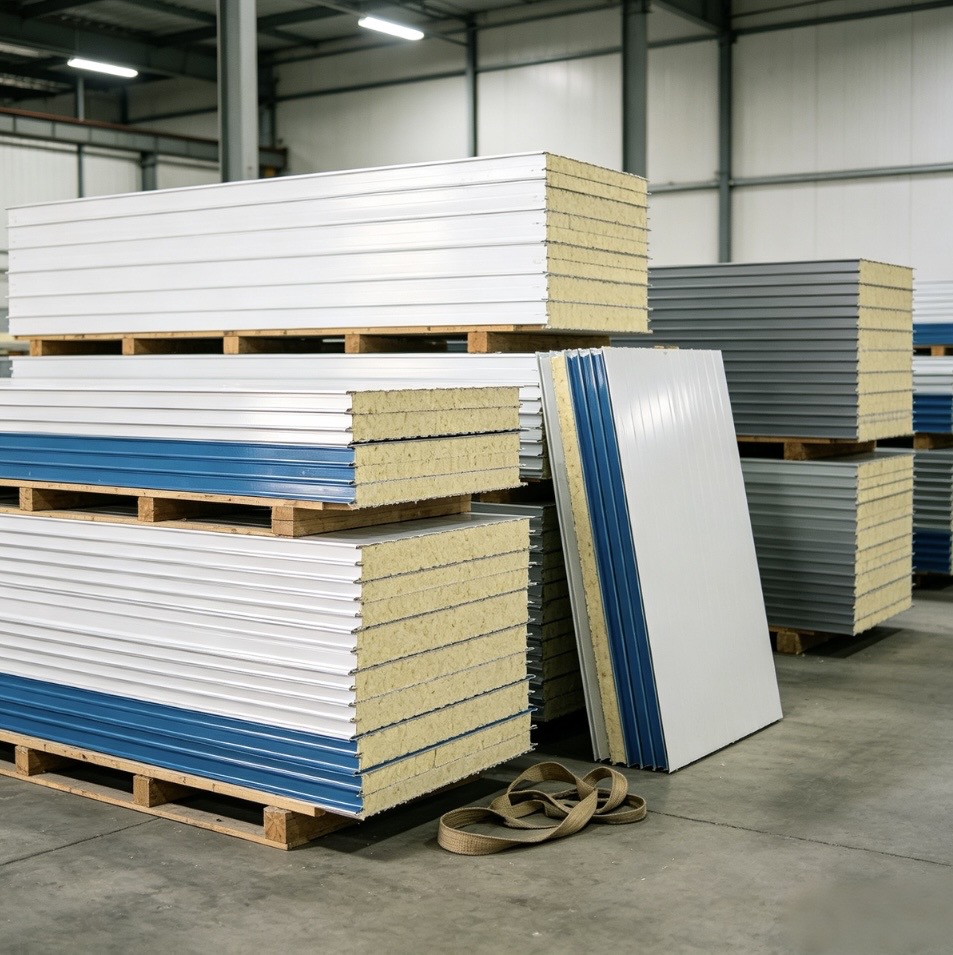
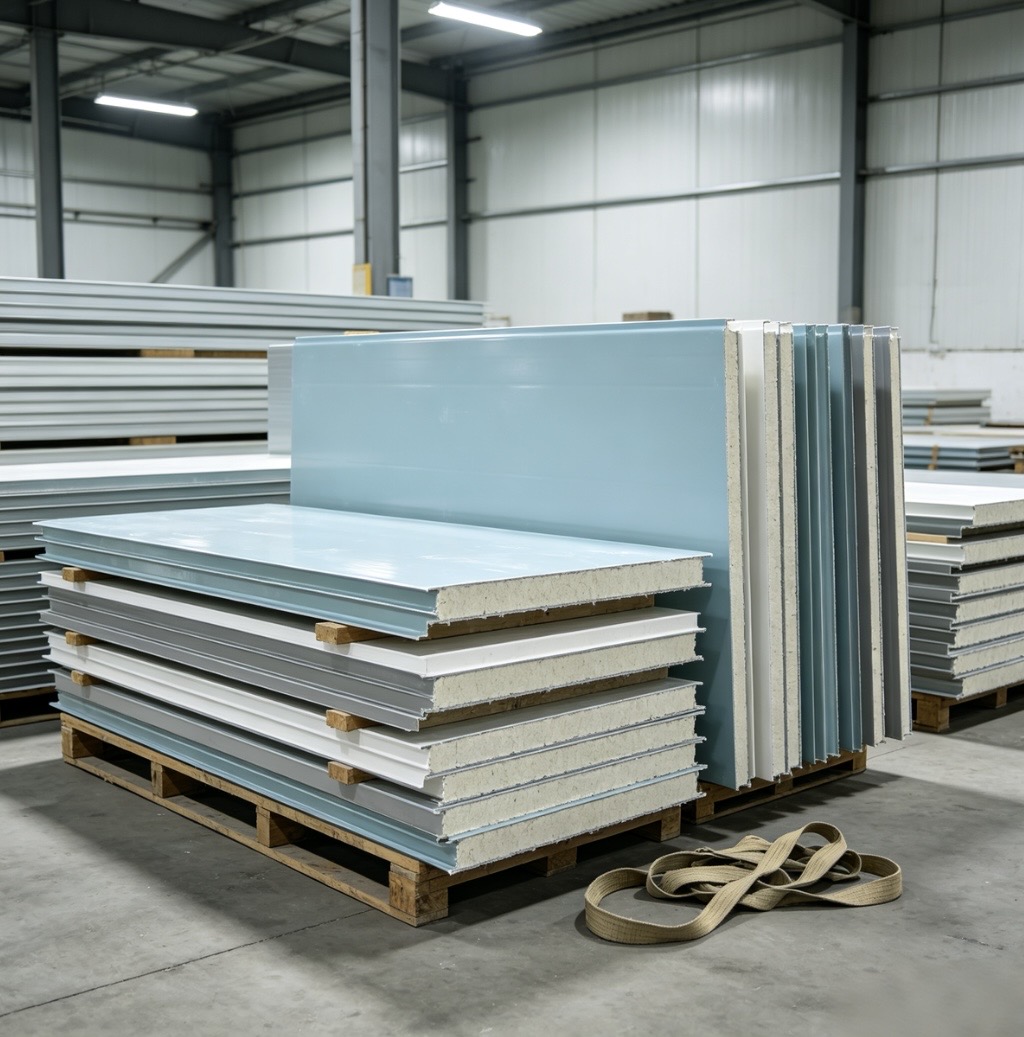
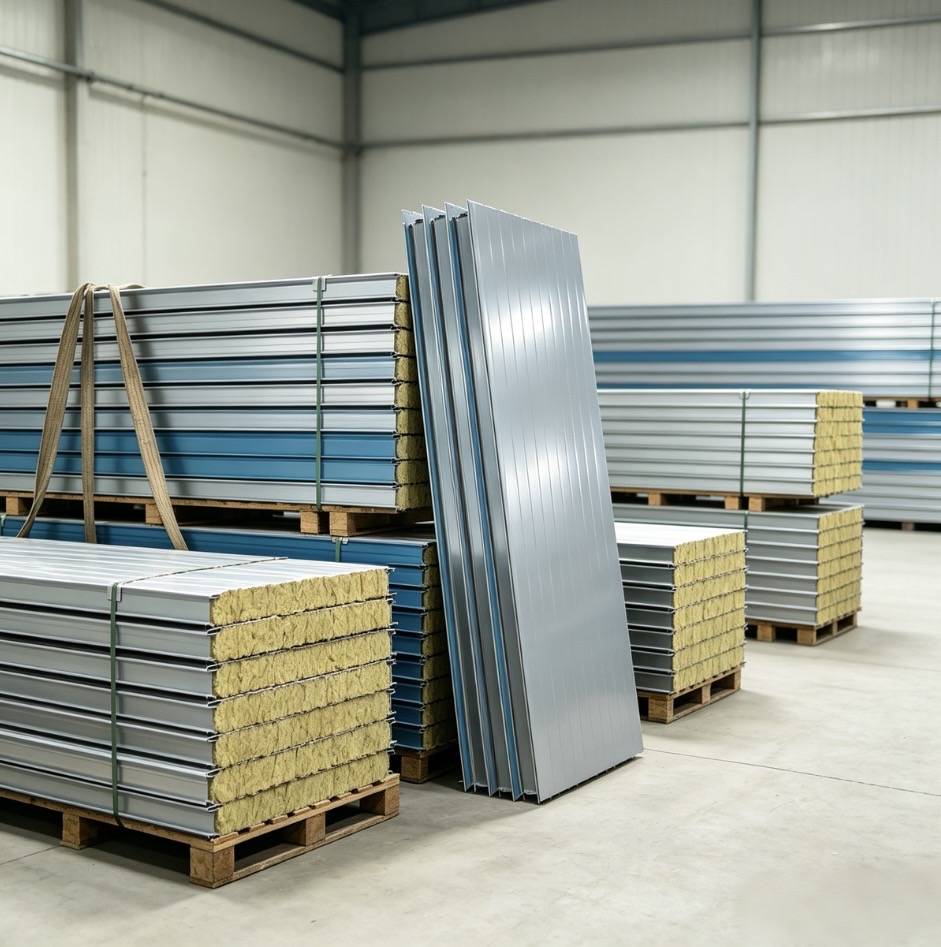
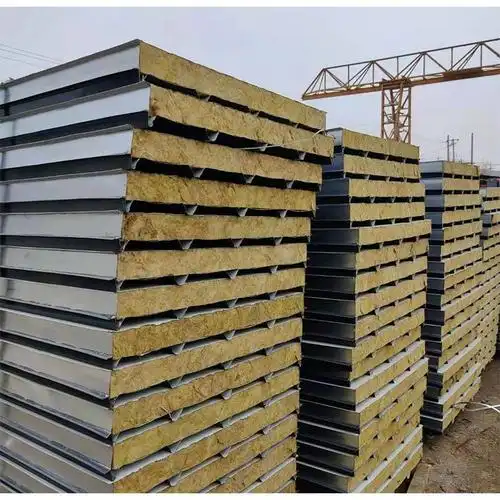
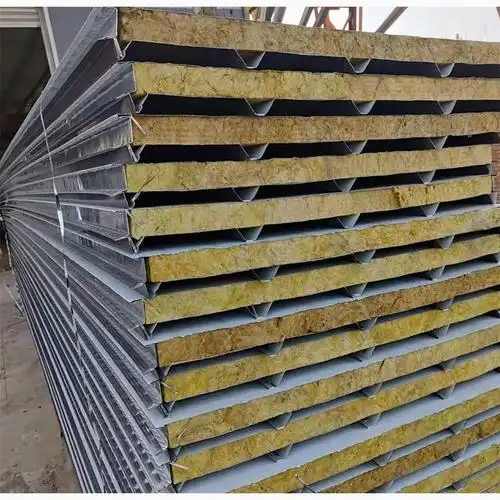
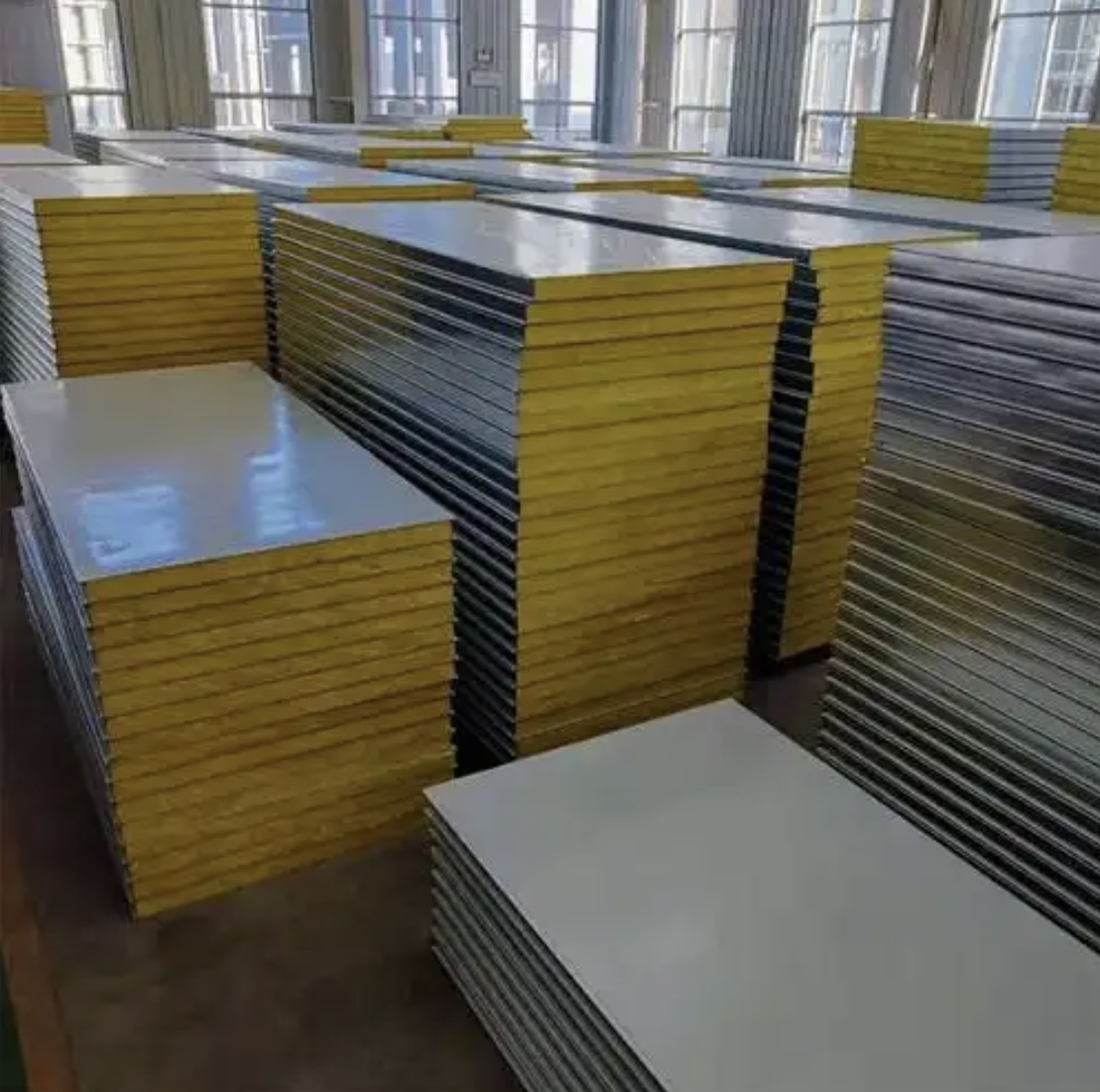
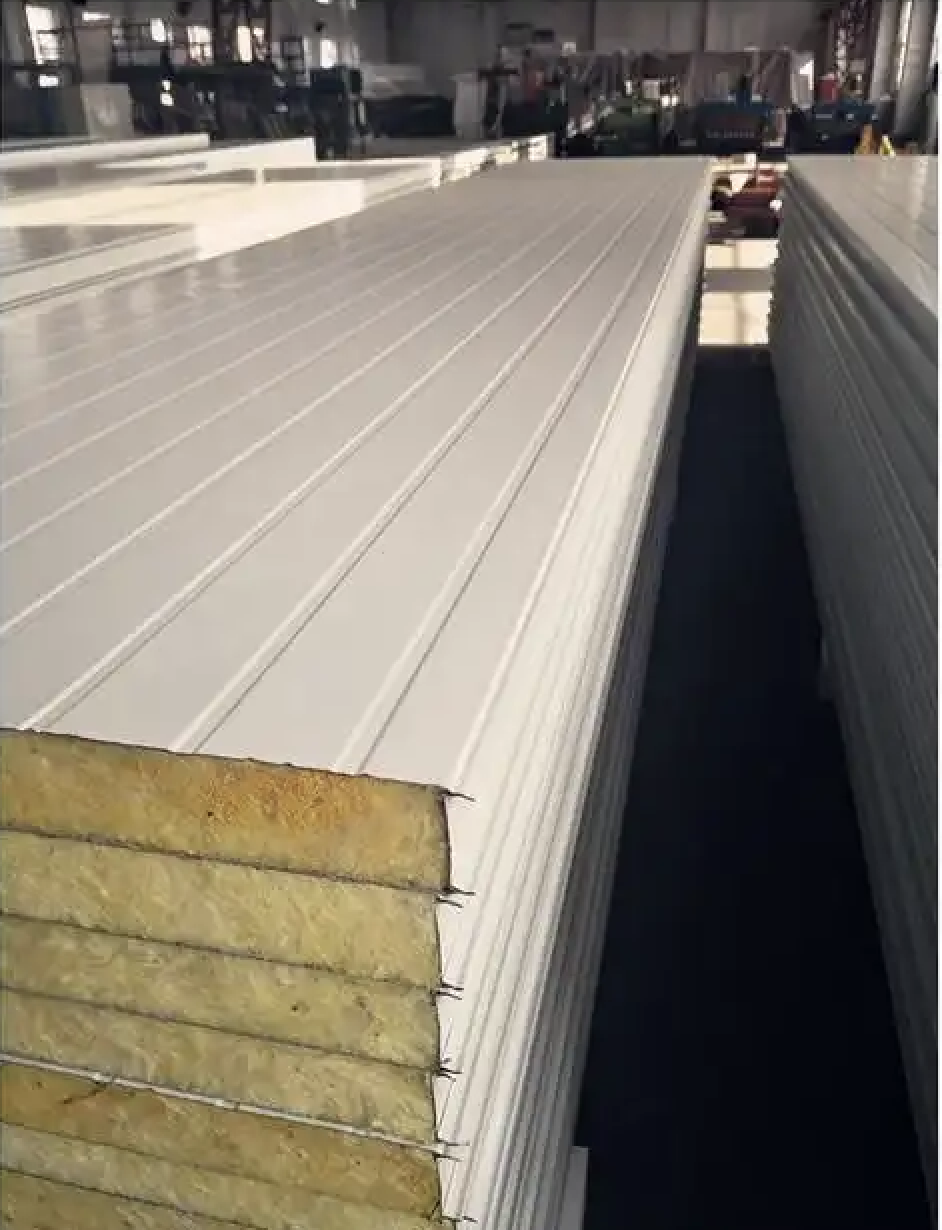
Color steel glass wool sandwich panel is a factory‑laminated composite enclosure material made of color‑coated steel facings and glass wool core. It integrates enclosure rigidity, thermal insulation and acoustic performance for lightweight building envelope construction.
Compared with mineral‑wool core alternatives, glass wool delivers lighter panel weight, lowering frame load and simplifying on‑site handling. Factory lamination ensures stable finished performance and shortens installation time versus on‑site assembled insulation systems. It is widely used for industrial envelopes, commercial partitions, roof‑wall cladding and acoustic barrier projects prioritizing light‑weight and sound‑absorbing properties.
Available specifications cover panel thickness 50‑200 mm, standard effective width 1000 mm, custom lengths up to 12000 mm, and steel sheet gauges 0.4‑0.8 mm. Core density and final dimensions follow project drawings. Negotiable MOQ applies to large‑scale tenders and recurring stock orders. Our team reviews drawings solely to assess production feasibility and does not undertake design‑related selections.
Product Features
1. Lightweight composite construction
The glass wool core offers lower density than rock wool, resulting in lighter panel weight that reduces building frame load and simplifies on-site handling and crane lifting.
2. Thermal and acoustic insulation
The glass fiber structure provides both thermal insulation and sound absorption. Its porous fibrous composition helps reduce heat transfer and absorb airborne sound energy within building enclosures.
3. Enclosure rigidity
The steel facings contribute to the panel's cladding performance, allowing use as wall and roof cladding. The composite construction provides reliable enclosure stability for building envelopes.
4. Fast installation
The large-format panels are crane-lifted and fixed directly to the building frame with self-drilling screws. Interlocking edges are designed for effective weather resistance when installed per project specifications, and installation labor is significantly reduced compared with traditional built-up systems.
Facing and Coating Options
Color steel sandwich panels are available with various surface finishes and coating systems. Available options include:
| Option Type | Description |
|---|---|
| Standard Color Coating | Polyester or PVDF coating in standard RAL colors; colors confirmed per project |
| Anti-Corrosion Coating | Enhanced coating system for aggressive environments |
| Embossed Finish | Embossed surface texture for reduced glare and improved aesthetics |
| Perforated Facing | Perforated steel sheet for enhanced acoustic applications (functional performance to be confirmed by project designer) |
Please specify the required facing type and coating when submitting your inquiry.
Technical Specifications
The following table shows the available manufacturing range for color steel glass wool sandwich panels. Final dimensions, core density, coatings, and packaging are confirmed according to order requirements and production feasibility.
| Parameter | Available Range |
|---|---|
| Panel Thickness | 50 – 200 mm |
| Effective Width | 1,000 mm (standard; custom widths available upon production review) |
| Panel Length | 2,000 – 12,000 mm |
| Steel Gauge | 0.4 – 0.8 mm (outer and inner facings) |
| Core Density | Typically 10 – 48 kg/m³ (final density per project drawings) |
| Core Material | Glass wool (fiberglass-based) |
| Coating | Polyester / PVDF / anti-corrosion coating system |
| Panel Joint | Tongue-and-groove or male-female interlocking |
Other dimensions and configurations may be available subject to production feasibility and minimum order quantity.
Applications
Color steel glass wool sandwich panels are suitable for building enclosure applications across the following areas:
1. Industrial and Commercial Buildings
Factory and warehouse wall cladding
Workshop and logistics facility enclosures
Commercial building partitions and facades
2. Roof and Wall Cladding Systems
Single-story building roof systems
Wall cladding for steel-frame buildings
Prefabricated building envelopes
3. Acoustic Applications
Sound barrier walls for noise-sensitive environments
Acoustic enclosures for equipment and machinery
Studio and auditorium partition systems
4. Specialist Building Applications
Prefabricated and modular building systems
Temporary and semi-permanent structures
Agricultural and storage building enclosures
Note: Our service executes fabrication strictly to customer-provided specifications. The product is supplied as a building component; final design, panel selection, fixing systems, fire ratings, thermal calculations, acoustic performance verification, and code conformity must be verified by the project owner and their qualified engineering team. We do not provide engineering certification or compliance validation for specific applications.
Customization and Packaging
Panel thickness, core density, length, steel gauge, coating system, color, and packaging are all tailored to order specifications and confirmed prior to production.
Panels are packed in protective stacks according to their dimensions and quantity. Container load calculations and stacking configurations are finalized per order to prevent panel damage during transit and optimize freight costs.
MOQ: Quoted based on specifications and order volume
Sample availability: Panel samples are available on customer's request
Production lead time: Determined by specifications and order size
Packaging: Protective stacks / plastic wrapping / steel banding / final packaging arranged per order
OEM marking: Offered upon request (labeling or paint marking)
FAQ
Q1. What core densities are available for the glass wool core?
Typical core density ranges from 10 kg/m³ to 48 kg/m³. Final density is confirmed per project drawings and specifications. Other densities may be available subject to order quantity and production feasibility.
Q2. How does glass wool compare to rock wool as a sandwich panel core?
Glass wool offers a lighter core weight, reducing building frame load and easing handling. Rock wool provides higher fire resistance and is typically specified where enhanced fire performance is required. Selection depends on project priorities.
Q3. What panel thickness should I choose for my project?
Thickness selection depends on thermal performance requirements, local climate, and building design specifications. Please refer to your project's thermal calculation documentation for guidance.
Q4. Can panels be supplied in custom colors?
Yes. Standard RAL colors are available, and custom colors can be matched subject to coating system availability. Color samples are confirmed prior to production.
Q5. Are the panels suitable for exterior wall applications?
Yes. The panels are designed for both exterior wall and roof cladding applications. Panel joints and fixing systems should be selected based on project wind load and weatherproofing requirements.
Q6. What is the maximum operating temperature for the glass wool core?
Glass wool typically maintains stable performance at temperatures up to approximately 250°C. For higher-temperature applications, alternative core materials such as rock wool should be considered. Please confirm specific temperature requirements with your project engineer.
Request a Quote
Have project specifications and panel requirements ready? Our technical team can review your documentation to assess production feasibility based on our shop capabilities.
To receive an accurate quotation, please provide:
Required panel thickness
Required panel length and quantity
Steel gauge requirement
Core density (if other than standard)
Coating type and color (RAL code or sample)
Application type (wall / roof / partition)
Packaging requirement
Destination port
We will confirm the available specifications, pricing, production lead time, and estimated shipping arrangements based on your requirements.