
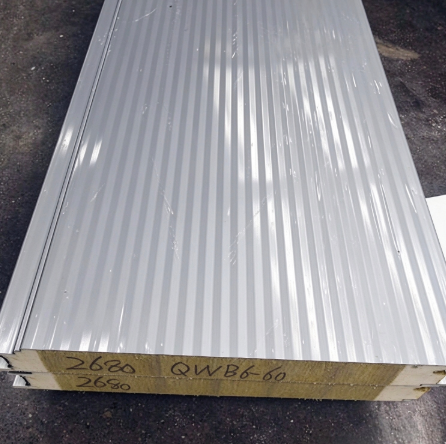
Steel-Faced Polyurethane Wall Panels for Commercial and Industrial Buildings
A PU Sandwich Wall Panel Manufacturer Focused on Joints, Not Just Foam
Most heat loss and leakage in an insulated building starts at the joints, fixings and cut edges, not in the foam itself. Xiaolong is a manufacturer of pu sandwich wall panel systems for industrial buildings, warehouses and modular facilities, and we build every panel around that fact: bonded steel facings, a dense closed-cell PU core and a tight tongue-and-groove edge. Planning a new building envelope? Send us your wall drawings and site conditions, and our team will suggest a pu sandwich wall panel build-up that fits your frame and your budget.
Steel Skins, a Dense PU Core and Joints that Stay Closed
Bonded Steel-and-Foam Construction
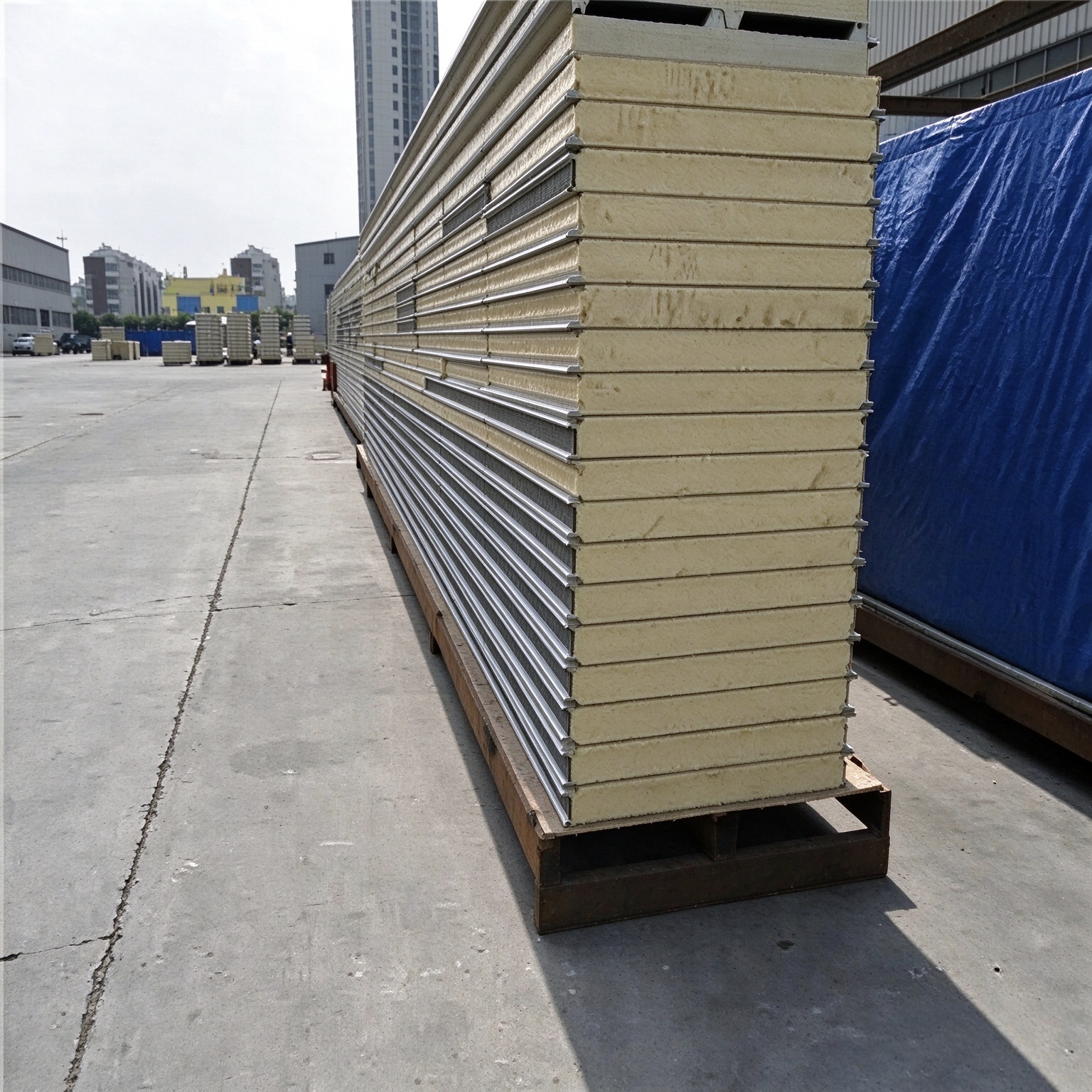
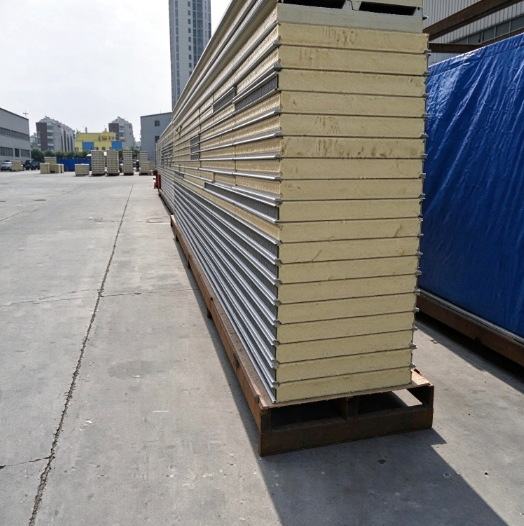
Rigid polyurethane foam is injected between two prepainted steel facings and cures into one bonded unit, so each Xiaolong pu sandwich wall panel behaves as a single stiff wall element rather than loose layers.
The closed-cell structure keeps moisture out of the core. Size your insulation on the aged conductivity value, not the fresh-foam figure, because cell gas slowly exchanges with air in the first years of service.
Tongue-and-Groove Joints with Concealed Fixing
Interlocking male-female edges with a sealing gasket reduce air leakage along the panel line, which is the weakest point in most insulated walls.
Fasteners sit under the lap, so no screw heads show on the weather face and fewer metal paths cross from the outer skin to the inner one.
Light Weight, Lighter Frames
At roughly 10–15 kg per square meter, depending on thickness and steel gauge, a pu sandwich wall panel can be lifted with light equipment and allows lighter girts than block or brick infill.
Full-width panels close a wall in fewer pieces, which means fewer joints to seal and fewer places for problems to start.
Coatings Matched to the Site
PE coatings suit dry inland sites, while HDP or PVDF coatings stand up better to strong sun, salt air and chemical atmospheres.
Inner and outer faces can use different finishes, such as an easy-clean coating inside and a weathering coating outside.
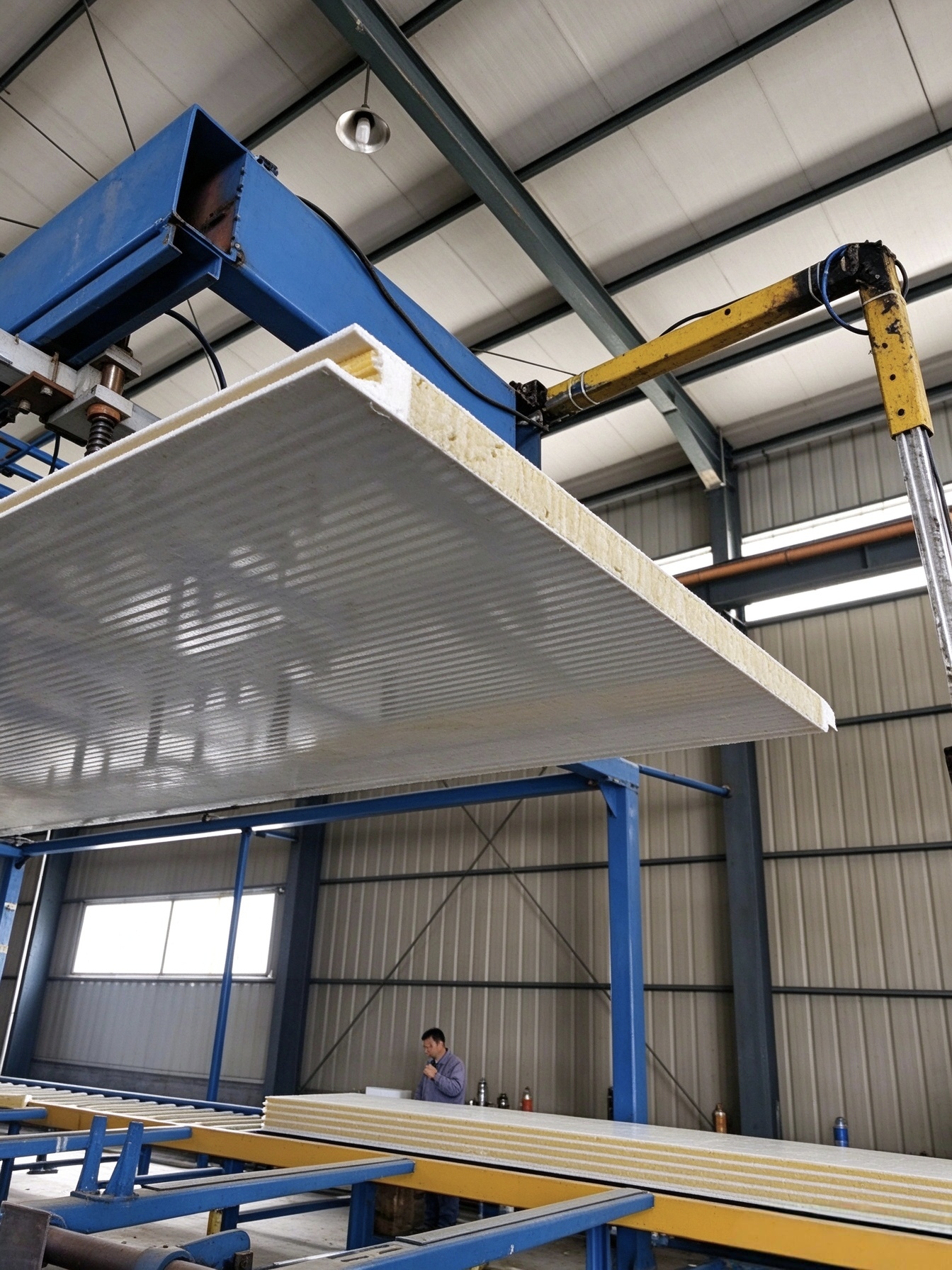
PU Sandwich Wall Panel Dimensions and Core Data at a Glance
|
Parameter |
Specification |
|
Facing Material |
Prepainted Galvanized Steel / Galvalume Steel |
|
Panel Thickness |
Available in Multiple Thicknesses |
|
Panel Width |
Customizable / Based on Product Series |
|
Panel Length |
Customized to Project Requirements |
|
Steel Facing Thickness |
Available in Different Gauges |
|
Core Density |
According to Manufacturer's Specification |
|
Thermal Conductivity |
According to Tested Product Data |
|
Color Options |
Available in Multiple Colors |
|
Installation Method |
Mechanical Fixing with Joint Sealing |
|
Main Application |
Industrial Buildings, Warehouses, Modular Facilities |
Where Lightweight Insulated Walls Earn Their Keep
Industrial Plants and Workshops
Exterior cladding on steel-frame factories, where steady indoor temperatures protect both machinery and staff.
Internal partitions between heated process areas and unheated storage zones.
Logistics and Distribution Centers
Long, uninterrupted wall runs on warehouses, where fast enclosure shortens the time stock and equipment sit in an open shell.
Dock-side walls that take regular knocks; add protective rails or choose a heavier outer steel gauge in these zones.
Livestock and Poultry Houses
Smooth, washable faces suit strict hygiene routines, and insulated walls hold house temperature through cold nights and hot afternoons.
A higher-grade coating helps the wall resist ammonia and frequent washdown.
Modular Site Offices and Prefab Buildings
Low panel weight keeps module transport and crane lifts manageable.
Accurate panel edges help modules line up on site without heavy rework.
Food Processing and Temperature-Controlled Rooms
Sealed joints help keep wash water and condensation out of the wall build-up.
Low conductivity lets a pu sandwich wall panel deliver the same insulation as a thicker, bulkier alternative.
Questions about Fire Behavior, Fixing, Wall Layout and Upkeep
1. When should a project use PIR or rock wool instead of a pu sandwich wall panel?
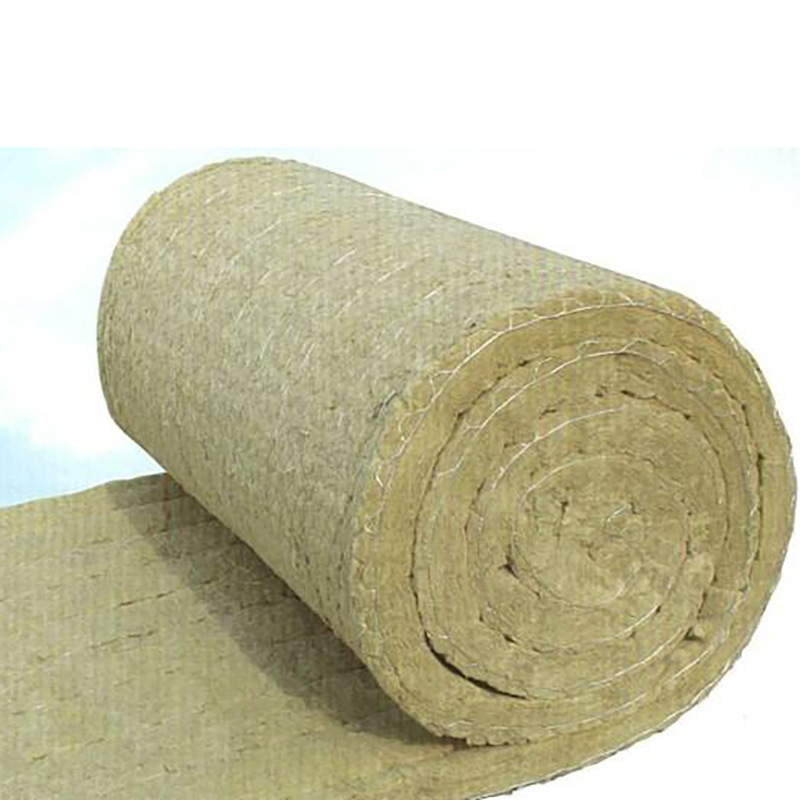
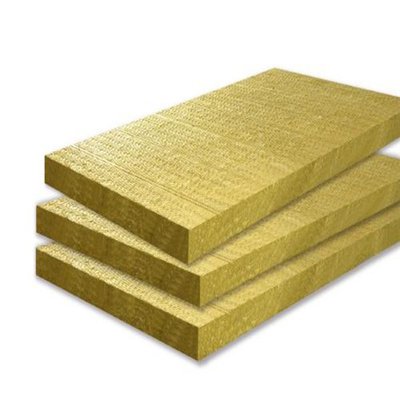
PU is an organic foam, so it is combustible even when flame-retarded formulas reach B1 or B2 reaction-to-fire levels. For ordinary warehouses, workshops and modular buildings this is usually acceptable. Where the code calls for fire-rated compartments, escape routes or walls near boilers and kitchens, non-combustible rock wool or PIR is the safer choice. Tell us your fire requirement early, and we will say honestly whether PU fits. Our color steel polyurethane sandwich panel selection guide compares core options in more detail.
2. Can I mount shelves, a TV or heavy equipment on a pu sandwich wall panel?
Light items fit with toggle-type or blind fasteners and a washer under the head. Heavy loads should never hang on the skin or foam alone; fix them to the steel frame behind the panel or use a backing plate with a through-bolt. Avoid expansion anchors, because foam cannot hold them.
3. Should a pu sandwich wall panel run vertically or horizontally on the frame?
Vertical panels span between horizontal girts, shed water straight down the joint lines and suit tall walls. Horizontal panels need vertical posts, create clean architectural lines and are easier to handle in shorter lengths. Let your frame spacing and wind load decide, and check the span data for the chosen thickness before fixing the layout.
4. How do I clean a pu sandwich wall panel and protect the coating?
Rinse with water and a mild detergent using a soft cloth, and avoid abrasive pads and solvents. Touch up scratches and freshly cut edges with matching paint promptly, since bare steel at a cut edge is where corrosion begins. Check the sealant around doors and windows once a year.
5. Why do some wall panels ripple in strong sunlight, and how is it avoided?
On a sunny elevation the outer skin heats up and expands more than the inner skin, and dark colors and rigid fixings make the effect stronger. Lighter colors on sun-facing walls, a suitable steel gauge, micro-profiled facings and correct girt spacing keep a pu sandwich wall panel flat and quiet in service.
Start Your Wall Specification With the Xiaolong Team
Whether you are pricing a single warehouse or a multi-building tender, Xiaolong supports project-based supply, bulk wholesale volumes and tender documentation, with factory test data available for your reviewers. Share the basics and we will come back with a practical pu sandwich wall panel proposal built for your project.