
How Do I Cut Phenolic Board?
Phenolic board looks tough, but a bad cut can crack the resin face, chip the edge, or ruin a whole sheet. One wrong blade choice costs you money.
To cut phenolic board, use a carbide-tipped or PCD blade, keep the feed rate slow, and support the sheet fully. This stops chipping and heat damage. A fine-tooth blade with a negative rake gives the cleanest edge on both plywood-based and compact phenolic panels.
I did not learn this from a textbook. I learned it from ruined sheets and dull blades. Once I understood how the resin face reacts to heat and pressure, my cuts got clean every time. Here is what I found out along the way, and here is what I still check before every job.
What Tools Cut Phenolic Board Best?
Standard wood blades dull fast on phenolic board. The resin layer is hard and abrasive, and it wears down normal steel teeth within just a few cuts.
Carbide-tipped or diamond (PCD) blades cut phenolic board best. A blade with 60 to 80 teeth, run at a moderate speed with a slow, steady feed, gives a clean cut and keeps the edge from chipping or burning.
Blade Type Matters More Than Speed
I used to think a faster saw meant a faster job. That idea is wrong for phenolic board. The resin face is hard, and it wears down normal steel blades in minutes. Carbide teeth last much longer under the same load. For CNC routing, solid carbide compression bits work well too, especially on thicker boards. I always run the tool at a high spindle speed but a slow feed rate. This step stops the material from heating up and melting at the cut line. Heat is the real enemy here, not speed. I also take several light passes on thick board instead of one deep cut. This habit keeps the edge sharp and reduces chipping on the bottom face. Dust control matters as much as blade choice. Phenolic dust is fine and can irritate the lungs, so I always run extraction or wear a proper mask.
|
Tool |
Best Use |
Note |
|
Carbide circular saw blade |
Straight cuts on thin sheets |
60-80 teeth, slow feed |
|
Solid carbide router bit |
CNC shaping, edge profiles |
Use multiple passes on thick board |
|
Bandsaw with abrasive blade |
Curved or irregular cuts |
Good for cloth-based sheets |
|
PCD diamond blade |
Long production runs |
Longer tool life, higher upfront cost |
What is Phenolic Board Made of?
Buyers often think phenolic board is just plastic. That mix-up leads to wrong choices, and it leads to boards that fail early in the wrong job.
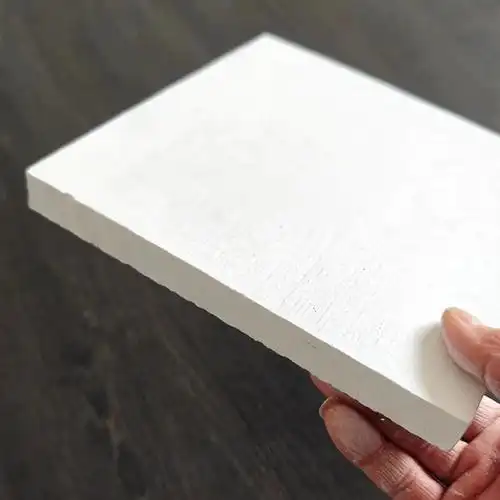
Phenolic board is made from thin wood veneers, or from layers of paper or cloth, bonded with phenol-formaldehyde resin under heat and pressure. The resin forms a hard, smooth surface film that resists water, chemicals, and abrasion.
Two Main Core Types
I place phenolic board into two groups. The first group uses wood veneers, glued crosswise, in the same way as plywood. The second group uses layers of paper or cotton cloth, soaked in resin, then pressed into one solid sheet. Both types get a hard resin film on the surface. This film is what gives phenolic board its strength and its water resistance. The wood-based type is common in construction, for concrete formwork and vehicle flooring. The paper or cloth-based type is common in electrical parts and machine components, because it holds its shape well under load. I always check the core type before I choose a blade or a sealant, because the two types behave in different ways under a saw. Paper-based board is more abrasive and wears tools faster. Wood-based board cuts more easily, but it can splinter at the edge without the right blade.
Where Do People Use Phenolic Board, and Is It Better Than Hardiflex?
Buyers ask me if phenolic board can replace Hardiflex. The answer is not simple, because the two materials solve different problems on a job site.
Phenolic board suits wet, high-wear jobs, such as flooring, formwork, and outdoor signage. Hardiflex, a fiber cement board, suits fire-rated walls and exterior cladding. Neither one is better overall. The right choice depends on moisture exposure, load, and fire code needs.
Compare the Two Materials
I get this question often, so I keep a simple comparison in my head. Phenolic board and Hardiflex look similar at first glance. Both are flat, rigid sheets. But they come from different families of material. Phenolic board is a resin-coated wood or paper laminate. Hardiflex is a fiber cement board, made from cement, sand, and cellulose fiber. This difference changes how each one performs on site. Phenolic board handles moisture and abrasion very well, so I recommend it for flooring, boat decking, and concrete formwork. Hardiflex handles fire and outdoor weather well, so it fits wall cladding and soffit boards. Phenolic board is lighter and easier to cut with normal power tools. Hardiflex is heavier, more brittle, and needs special blades to control dust and avoid cracking. I never treat one material as an upgrade for the other. I treat them as two tools for two different jobs.
How Do I Seal Phenolic Board After Cutting?
A fresh cut edge on phenolic board has no resin film left on it. Without sealing, water gets in fast, and the layers start to separate.
To seal phenolic board, apply an edge sealant, acrylic edge paint, or epoxy resin to every cut edge, then let it dry fully before use. This step stops moisture from entering the exposed core and keeps the board stable for years.
Sealing Steps I Follow
Sealing sounds like a small step, but I treat it as a required step, not an option. Every time I cut a new edge, the raw core sits open to the air. Water finds its way in through this open edge faster than through the flat surface. Once water gets inside, the layers can swell, warp, or pull apart. I always clean the cut edge first, to remove dust and loose fibers. Then I apply a thin first coat of edge sealant, let it soak in, and follow with a second, thicker coat. For outdoor projects, I prefer epoxy, because it forms a harder barrier against standing water. For indoor projects, acrylic edge paint is enough, and it dries faster. I always seal edges before I install the board, never after. Fixing a leak after installation costs far more time and far more money.
How Long Does Phenolic Board Last?
Some phenolic board lasts decades. Other sheets fail within two years. The difference almost always comes down to how the board was cut and sealed.
Phenolic board can last 15 to 25 years or more in the right conditions. Lifespan depends on edge sealing, moisture exposure, load, and surface care. Unsealed edges or constant standing water can cut that lifespan down to just a few years.
Factors That Shorten or Extend Service Life
I have seen phenolic board fail early, and I have seen it hold up for years past its expected life. The difference is never the material itself. I always tell buyers to check the board once a year. Look for lifted edges, dark spots, or soft areas, and reseal early if you find any. Small maintenance steps like these add real years to the working life of the board.
|
Factor |
Effect on Lifespan |
My Recommendation |
|
Edge sealing |
Major factor |
Seal every cut edge |
|
Standing water |
Shortens life fast |
Improve drainage, reseal often |
|
UV exposure |
Fades, weakens surface |
Use a protective coating outdoors |
|
Point loads |
Cracks the surface |
Add load-spreading pads |
Conclusion
Cutting phenolic board properly takes more than simply choosing a blade. The right cutting method, a controlled feed, and proper edge sealing can all help protect the board and support its long-term performance.
In practice, understanding how a material behaves during processing and under long-term working conditions is often just as important as its basic specifications. Through years of working with manufacturers, distributors, and real project requirements, we have seen that the right material choice and proper handling can help avoid many unnecessary issues later on.
That is why we focus on sharing practical, application-based insights—to help buyers better understand phenolic board, evaluate their options, and make more informed decisions for their projects.
References
[1] TOSIZE.ie. "What is Phenolic Plywood and where do you order it?" tosize.ie/what-is-phenolic-plywood
[2] Southern Timber. "Phenolic Ply." southern-timber.co.uk/sheet-materials/phenolic-ply
[3] Gabarro. "Advantages of Phenolic Plywood vs. Phenolic Compact Panel." gabarro.com/en/news/advantages-phenolic-plywood-vs-phenolic-compact-panel
[4] Metsä Wood. Environmental Product Declaration, overlaid birch plywood. environdec.com/library/epd3018
[5] CNC Arena forum. "Bits for phenolic boards." en.cncarena.com/forum/thread/385805-bits-for-phenolic-boards
[6] Sheet Materials Wholesale. "Phenolic Plywood." sheetmaterialswholesale.co.uk/sheet-materials/plywood/phenolic-plywood