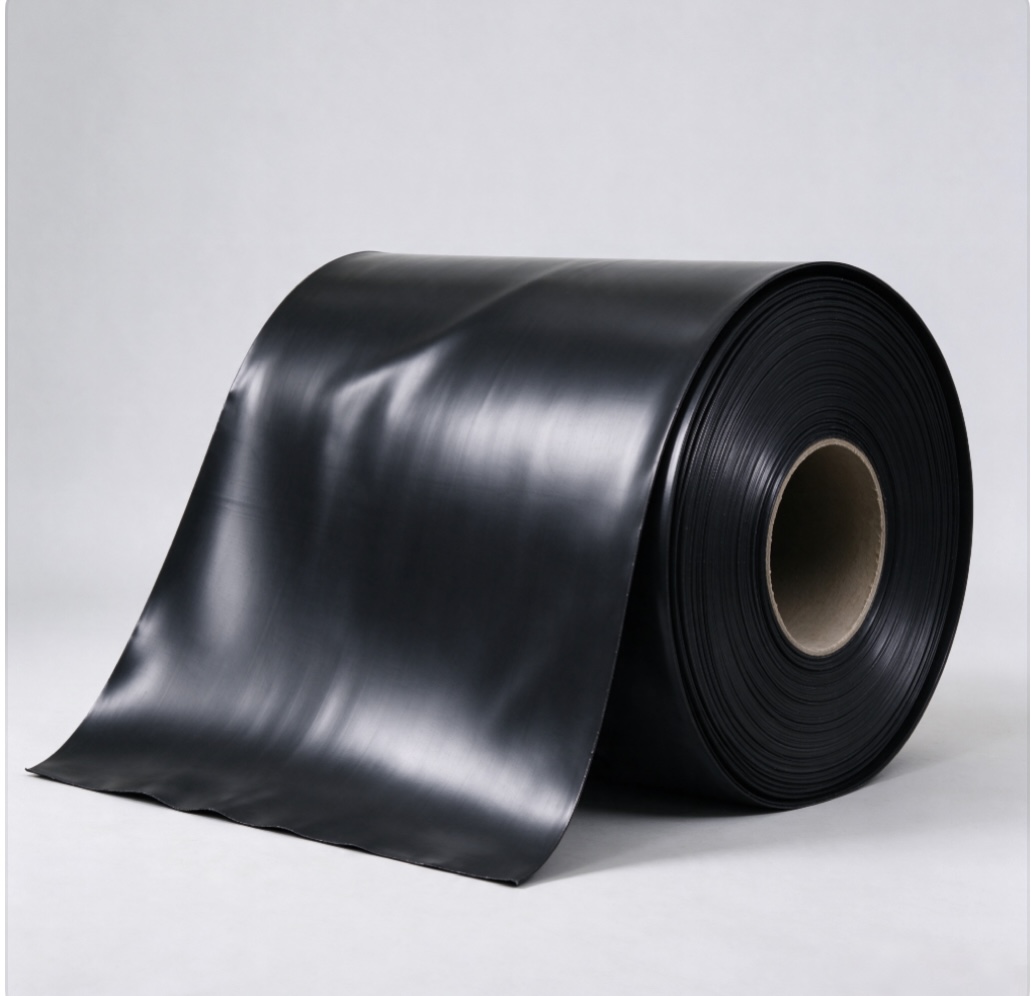
HDPE Geomembrane for Fish Pond: Anti-Seepage Aquaculture Liner
Our HDPE geomembrane for fish pond is a high-density polyethylene liner designed to reduce water seepage in fish ponds, shrimp farms, and aquaculture facilities. It helps maintain stable water levels, reduce water loss, and simplify pond maintenance. Available in thicknesses from 0.3 mm to 3.0 mm, the liner can be selected according to pond size, ground conditions, and farming requirements. Contact us with your project details to discuss suitable specifications and request a quotation.
Key Benefits of HDPE Geomembrane for Fish Ponds
Reliable Seepage Control
HDPE geomembrane creates a low-permeability barrier between pond water and the underlying soil. When properly installed and welded, it helps minimize water loss and supports more consistent water-level management.
Chemical Resistance
HDPE offers good resistance to many chemicals and is suitable for various water containment applications. For aquaculture projects, confirm that the selected product meets the requirements for the intended water-contact environment.
Easy Pond Maintenance
A smooth liner surface can simplify sediment removal, cleaning, and routine pond preparation. This is particularly useful for intensive fish and shrimp farming, where pond hygiene and maintenance are important between production cycles.
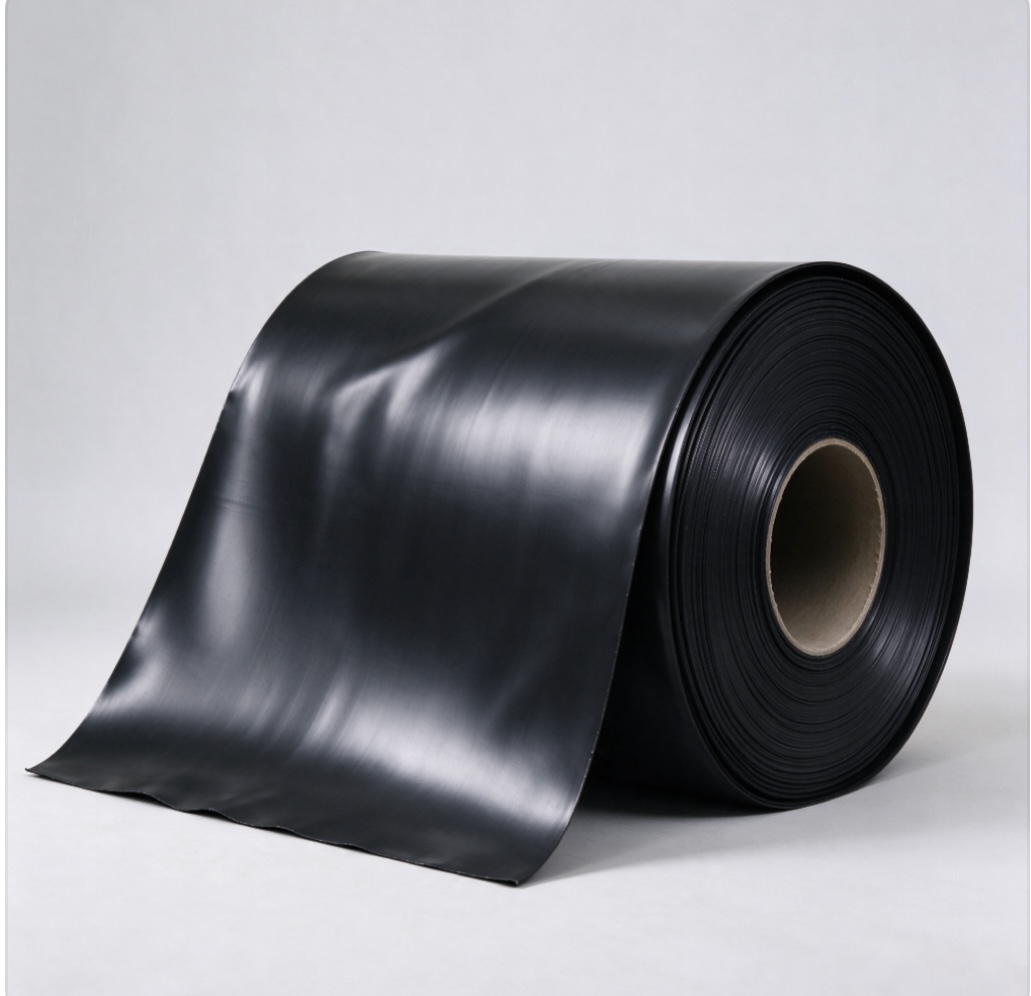
Recommended Thickness by Pond Type
Choosing the right HDPE geomembrane for fish pond applications depends on pond dimensions, soil conditions, installation methods, and puncture risks. The following thicknesses are preliminary guidelines.
Small fish ponds (<500 m²): 0.5–0.75 mm for suitable sites with well-prepared ground.
Commercial fish ponds (500–5,000 m²): 0.75–1.0 mm, depending on site conditions.
Shrimp ponds and intensive aquaculture: 1.0–1.5 mm where additional puncture resistance is needed.
Large reservoirs and broodstock ponds: 1.5–2.0 mm for potentially more demanding applications.
Selection Tip: Smooth HDPE liners can simplify cleaning in shrimp ponds. For uneven ground, remove sharp objects and consider protective geotextile to reduce the risk of punctures.
The final thickness should be determined according to actual site conditions and project requirements.
Key Specifications
|
Parameter |
Specification |
|
Material |
High-Density Polyethylene (HDPE) |
|
Density |
Typically ≥ 0.94 g/cm³; confirm actual product grade |
|
Thickness |
0.3–3.0 mm |
|
Roll Width |
Available widths to be confirmed |
|
Surface Type |
Smooth or textured, depending on product availability |
|
Permeability |
Very low permeability when properly installed |
|
UV Resistance |
UV-stabilized options available, subject to confirmation |
|
Applicable Standard |
GB/T 17643, where applicable to the selected product grade |
Note: Actual specifications, available dimensions, UV resistance, and applicable standards should be confirmed before ordering.
HDPE Fish Pond Liner Installation Overview
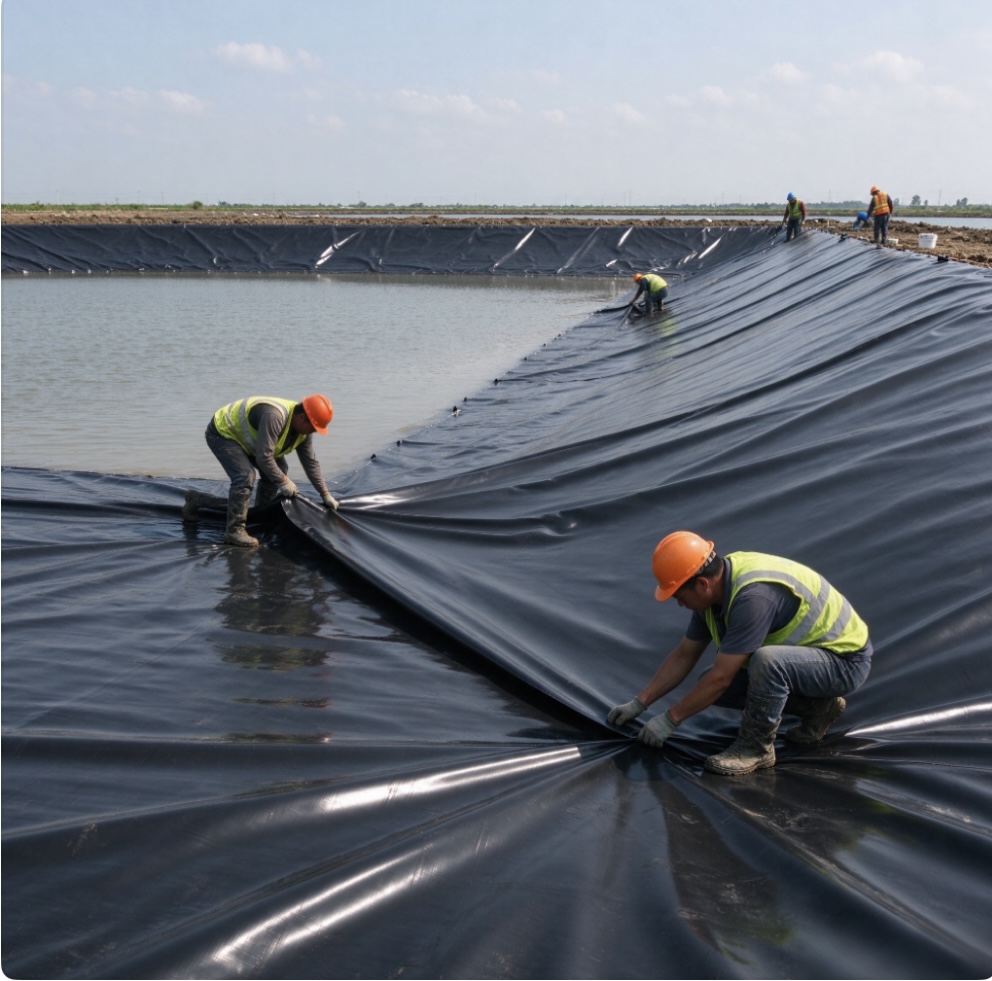
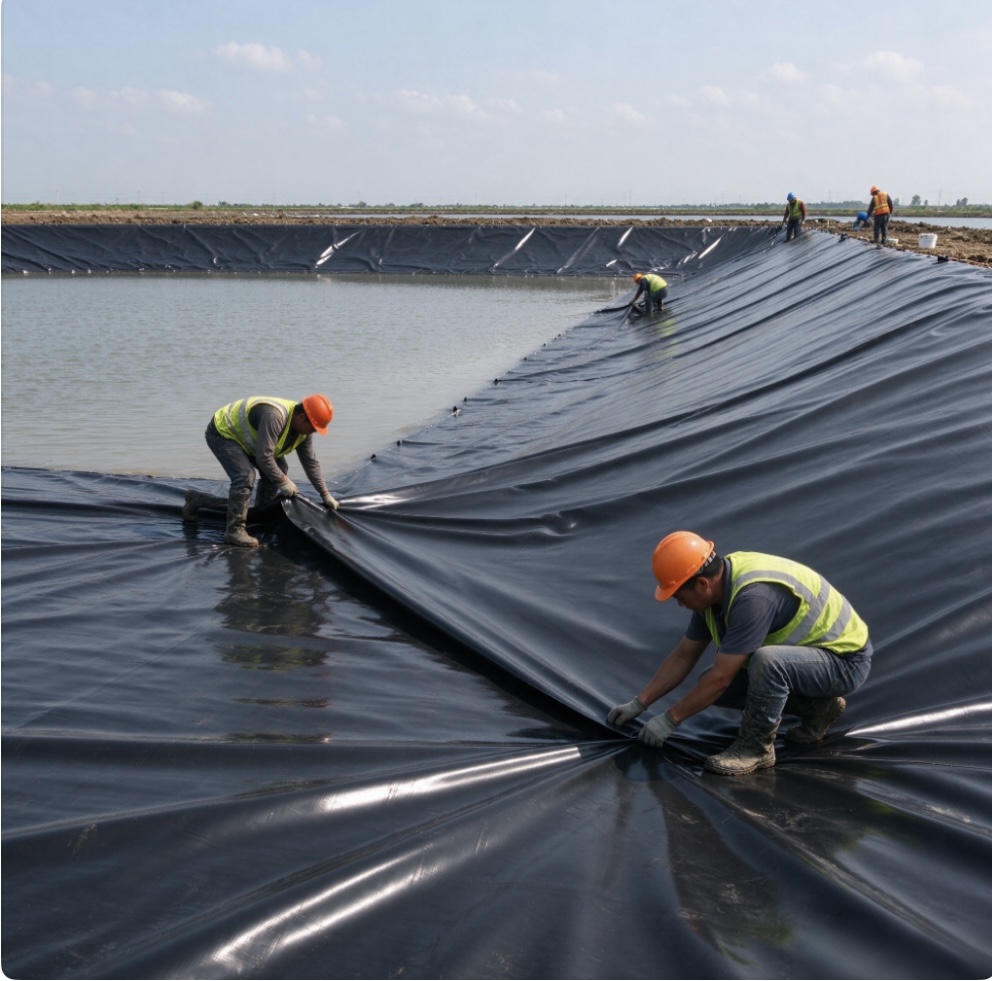
1.Prepare the Ground: Remove stones, roots, and debris, compact the surface, and install protective geotextile if needed.
2.Deploy the Liner: Unroll the material carefully and position panels according to the installation plan.
3.Weld the Seams: Use compatible hot-wedge or extrusion welding equipment with appropriate settings.
4.Inspect the Seams: Apply suitable air-pressure or vacuum-box testing where applicable.
5.Anchor and Fill: Secure the liner in an anchor trench, complete backfilling, and fill the pond gradually.
Proper ground preparation and seam inspection are essential for reducing leakage risks. Follow the manufacturer's instructions for panel overlaps, welding conditions, and quality checks.
Frequently Asked Questions
1. What thickness is suitable for my fish pond?
Thickness depends on pond dimensions, soil conditions, and farming methods. Share your pond area and application to receive a more suitable recommendation.
2. Is HDPE geomembrane safe for fish and shrimp?
Suitability depends on the resin, additives, and product quality. Confirm aquaculture suitability and applicable water-contact requirements before purchasing.
3. How long does an HDPE fish pond liner last?
Service life depends on thickness, UV exposure, installation quality, and maintenance. The expected lifespan should be evaluated against the actual product specifications and site conditions.
4. What is the minimum order quantity?
A reference MOQ is 3,000 m², subject to confirmation. Contact us to check availability and order requirements for your project.
Request a Quote for HDPE Geomembrane for Fish Pond
Planning a fish pond or shrimp farming project? Send us your pond type, total area, required thickness, destination country, and estimated quantity. Our team can help you review available specifications and prepare a quotation for your project.
Contact us today to discuss your HDPE geomembrane requirements and request pricing.
Explore our HDPE geomembrane products or visit our Waterproof Materials page for more waterproofing solutions.